
Neuropeptide: Physiology and What Research Reports
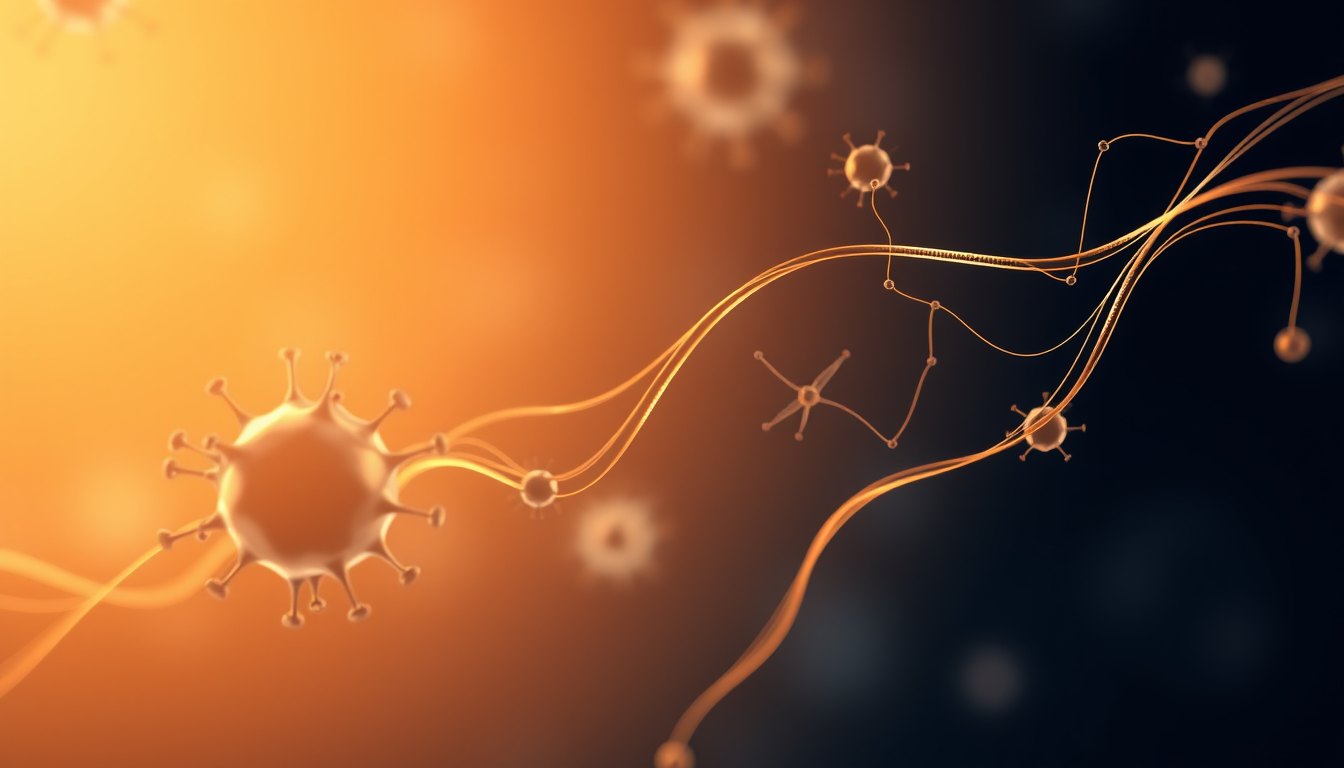
A neuropeptide is a short chain of amino acids released by neurons and neuroendocrine cells to signal to other cells, usually by binding G protein-coupled receptors. Neuropeptides are cut from larger precursor proteins, act over slower timescales than classical neurotransmitters, and influence functions such as arousal, feeding, memory and breathing. Published work covers their evolutionary origins, computational discovery from genomes, sensor-based detection in living brains, and animal experiments on individual neuropeptides such as neuropeptide S.
What a neuropeptide is
A neuropeptide is a small protein-like molecule — typically a few to a few dozen amino acids long — that is produced by neurons or neuroendocrine cells and released to signal to other cells. Most neuropeptides act through G protein-coupled receptors rather than fast ion channels, which is why the literature often describes them as slower, longer-lasting modulators of circuits rather than moment-to-moment transmitters. A review of neuropeptide signalling systems described these peptide–receptor pairs as an ancient and widespread mode of intercellular communication across the animal kingdom (PMID 29440283).
This page is for educational purposes only and is not medical advice; consult a licensed physician about any health question or any decision involving a medicine or supplement.
How neuropeptides are made
Neuropeptides are not translated directly in their mature form. A gene encodes a larger precursor or prohormone protein, which is processed inside secretory vesicles by enzymes that cut at specific cleavage sites, often followed by chemical modifications such as amidation. Because the mature peptide depends on where the precursor is cut, identifying cleavage sites is a central problem in the field: researchers developed NeuroCS as a computational tool to predict cleavage sites of neuropeptide precursors from sequence data (PMID 31721688).
The same logic drives genome- and proteome-scale discovery. A 2024 method paper described NeuroPeptide-HMMer (NP-HMMer), a hidden Markov model approach for proteome-wide identification of neuropeptides, which the authors applied to find candidate precursors that simpler similarity searches can miss (PMID 39084320). Comparative work has used the same precursor-centred framework across species: one analysis reported changes in neuropeptide prohormone genes among Cetartiodactyla livestock and wild species associated with evolution and domestication (PMID 35622775).
Where neuropeptides are produced and what they do
Neuropeptide-producing cells are concentrated in the brain — particularly the hypothalamus and brainstem — but are also found in the gut, pancreas, and peripheral nerves. Functionally, neuropeptide systems have been linked in animal work to arousal, respiration, feeding, stress responses, social behaviour and memory. A commentary in Cell discussed a neuropeptide involved in making memories, highlighting how peptide signalling can shape how experiences are encoded rather than simply relaying information point to point (PMID 34715019).
Neuropeptide S as a worked example
Neuropeptide S (NPS) illustrates how one peptide system is dissected experimentally. A 2023 study identified a cluster of neuropeptide S neurons that regulated breathing and arousal, tying a single peptidergic population to two physiological outputs that are usually studied separately (PMID 38056461). In a separate rodent experiment, researchers reported that neuropeptide S attenuated methamphetamine-induced stereotyped behaviour in rats (PMID 32446398). Both are animal studies of endogenous signalling; neither establishes anything about use in people, and neither is a clinical trial.
Doing the math on a vial? The PeptideU app does reconstitution, units and dilution for you.
Try it freeAn ancient signalling system
One of the most striking themes in the recent literature is how old neuropeptide signalling appears to be. A 2022 evolutionary analysis reported a premetazoan origin of neuropeptide signalling, placing components of the system before the emergence of animals (PMID 35277960). An evolutionary genomics survey examined neuropeptide genes in Hydrozoa and in Endocnidozoa (Myxozoa), showing how these gene families can expand or contract across lineages (PMID 34847889). In nematodes, researchers traced the evolution of neuropeptide Y/RFamide-like receptors, a receptor family that is central to how these peptides are recognised (PMID 39130429).
Why this matters to a reader meeting the word for the first time: the deep conservation described in these papers is the reason that findings in worms, jellyfish or flies are frequently used to generate hypotheses about mammalian peptide systems, and the reason many mammalian neuropeptides have recognisable relatives in invertebrates (PMID 29440283).
How neuropeptides are measured and studied
Neuropeptides are technically difficult to measure. They are released in small amounts, act locally, are rapidly degraded, and often exist alongside closely related peptides from the same precursor. The field has responded with a mix of computational, sensor-based and assay-based tools.
| Approach | What the literature describes |
|---|---|
| Proteome mining | NP-HMMer was described as a hidden Markov model tool for proteome-wide neuropeptide identification (PMID 39084320). |
| Precursor processing prediction | NeuroCS was described as a tool to predict cleavage sites of neuropeptide precursors (PMID 31721688). |
| Live-brain sensors | A 2023 Science perspective discussed genetically encoded sensors for grabbing neuropeptide signals in the brain (PMID 37972194). |
| Blood-based assays | A methods paper described a neuropeptide reporter assay applied to serum, capillary blood and dried blood cards (PMID 32685383). |
| Comparative genomics | Prohormone gene comparisons across species were reported in Cetartiodactyla (PMID 35622775) and in Hydrozoa and Myxozoa (PMID 34847889). |
Sensor methods matter because, unlike classical transmitters, neuropeptide release has historically been inferred indirectly; the 2023 perspective framed fluorescent sensors as a way to observe peptide signals with better spatial and temporal resolution in living tissue (PMID 37972194).
Tracking research? Log entries with dates, lots and notes — records, never plans.
Get the appWhy the term appears so often in peptide discussion
"Peptide" is a chemical category — any short amino-acid chain. "Neuropeptide" is a narrower, physiological category: a peptide that a nervous system uses as a signal. Many well-known research peptides are named after, or derived from, endogenous neuropeptide families, so the word is encountered constantly in reading about peptide science. Understanding the term helps separate three different things a source might be discussing: (1) the endogenous molecule and its normal physiology, (2) a synthetic analogue built on that sequence, and (3) a receptor-targeting drug that is not a peptide at all.
- Endogenous neuropeptide — made from a precursor gene, released by neurons, described in the physiology literature (PMID 29440283).
- Receptor family — the GPCRs that bind the peptide, which themselves evolve, as shown for neuropeptide Y/RFamide-like receptors in nematodes (PMID 39130429).
- Experimental tool — peptides delivered in animal experiments to probe circuit function, as in the rat neuropeptide S study (PMID 32446398).
Safety and Adverse Events: What Studies Report
The verified literature summarised here is mechanistic, computational and preclinical: evolutionary genomics, discovery tools, sensors, assays, and animal circuit experiments. These papers did not report human safety outcomes, tolerability data or adverse-event rates. The rodent neuropeptide S study reported a behavioural outcome — attenuation of methamphetamine-induced stereotyped behaviour in rats — rather than a safety endpoint (PMID 32446398), and the mouse work on neuropeptide S neurons described effects on breathing and arousal as physiological readouts (PMID 38056461). Readers encountering claims that a neuropeptide-derived compound is safe or effective in humans should note that the evidence type on this page does not support such conclusions.
Want the full course? Every compound, evidence-graded and cited, inside PeptideU.
Start learning freeReferences
- Evolution of neuropeptide signalling systems (The Journal of Experimental Biology, 2018)
- Premetazoan Origin of Neuropeptide Signaling (Molecular Biology and Evolution, 2022)
- Proteome-wide neuropeptide identification using NeuroPeptide-HMMer (NP-HMMer) (General and Comparative Endocrinology, 2024)
- NeuroCS: A Tool to Predict Cleavage Sites of Neuropeptide Precursors (Protein and Peptide Letters, 2020)
- Grabbing neuropeptide signals in the brain (Science, 2023)
- Neuropeptide reporter assay for serum, capillary blood and blood cards (MethodsX, 2020)
- A cluster of neuropeptide S neurons regulates breathing and arousal (Current Biology, 2023)
- Neuropeptide S attenuates methamphetamine-induced stereotyped behavior in rats (Biochemical and Biophysical Research Communications, 2020)
- A neuropeptide making memories (Cell, 2021)
- Evolution of neuropeptide Y/RFamide-like receptors in nematodes (Heliyon, 2024)
- An evolutionary genomics view on neuropeptide genes in Hydrozoa and Endocnidozoa (Myxozoa) (BMC Genomics, 2021)
- Changes in Neuropeptide Prohormone Genes among Cetartiodactyla Livestock and Wild Species Associated with Evolution and Domestication (Veterinary Sciences, 2022)
Frequently asked questions
What is a neuropeptide in simple terms?▾
It is a short chain of amino acids that neurons and neuroendocrine cells release as a signal to other cells, usually acting through G protein-coupled receptors. Reviews describe neuropeptide–receptor pairs as a widespread and ancient mode of intercellular communication across animals (PMID 29440283), with components of the system traced to before the origin of animals themselves (PMID 35277960).
How is a neuropeptide different from a neurotransmitter?▾
Classical neurotransmitters are small molecules that act fast at ion channels; neuropeptides are larger, are cut from precursor proteins, and typically signal more slowly through G protein-coupled receptors. Because peptide release is hard to observe directly, researchers have developed genetically encoded fluorescent sensors to capture neuropeptide signals in living brain tissue (PMID 37972194).
Where do neuropeptides come from inside a cell?▾
A gene encodes a larger precursor or prohormone, which enzymes cleave at specific sites inside secretory vesicles to release the mature peptide. Predicting where those cuts occur is itself a research problem: NeuroCS was described as a computational tool for predicting cleavage sites of neuropeptide precursors from sequence information (PMID 31721688).
How do researchers find new neuropeptides?▾
Mainly by searching genomes and proteomes for precursor signatures. A 2024 paper described NeuroPeptide-HMMer (NP-HMMer), a hidden Markov model tool for proteome-wide neuropeptide identification (PMID 39084320). Comparative genomics is also used: one analysis reported changes in neuropeptide prohormone genes among Cetartiodactyla livestock and wild species linked to evolution and domestication (PMID 35622775).
What does the literature report about neuropeptide S?▾
A 2023 study identified a cluster of neuropeptide S neurons that regulated breathing and arousal in animals (PMID 38056461). Separately, researchers reported that neuropeptide S attenuated methamphetamine-induced stereotyped behaviour in rats (PMID 32446398). Both are preclinical animal experiments examining endogenous signalling, not clinical trials, and they do not describe outcomes in people.
Are neuropeptides involved in memory?▾
Peptide signalling has been linked to how experiences are encoded. A 2021 commentary in Cell discussed a neuropeptide making memories, describing peptidergic modulation as shaping circuit activity rather than simply relaying signals point to point (PMID 34715019). The broader evidence base for memory-related neuropeptides remains largely mechanistic and animal-based.
Can neuropeptides be measured in blood?▾
Some assay work has addressed this. A methods paper described a neuropeptide reporter assay applied to serum, capillary blood and dried blood cards (PMID 32685383). Measurement remains technically demanding because neuropeptides circulate at low concentrations, degrade quickly, and often co-exist with closely related peptides generated from the same precursor protein.
Track it. Calculate it. Actually understand it.
References
This page summarises published research for education — it is not medical advice, and nothing here is a recommendation to use, purchase, or dose any substance. Study parameters described are what researchers reported, not instructions. Consult a qualified clinician before any health decision.