
Growth Factors: Physiology and What Research Reports
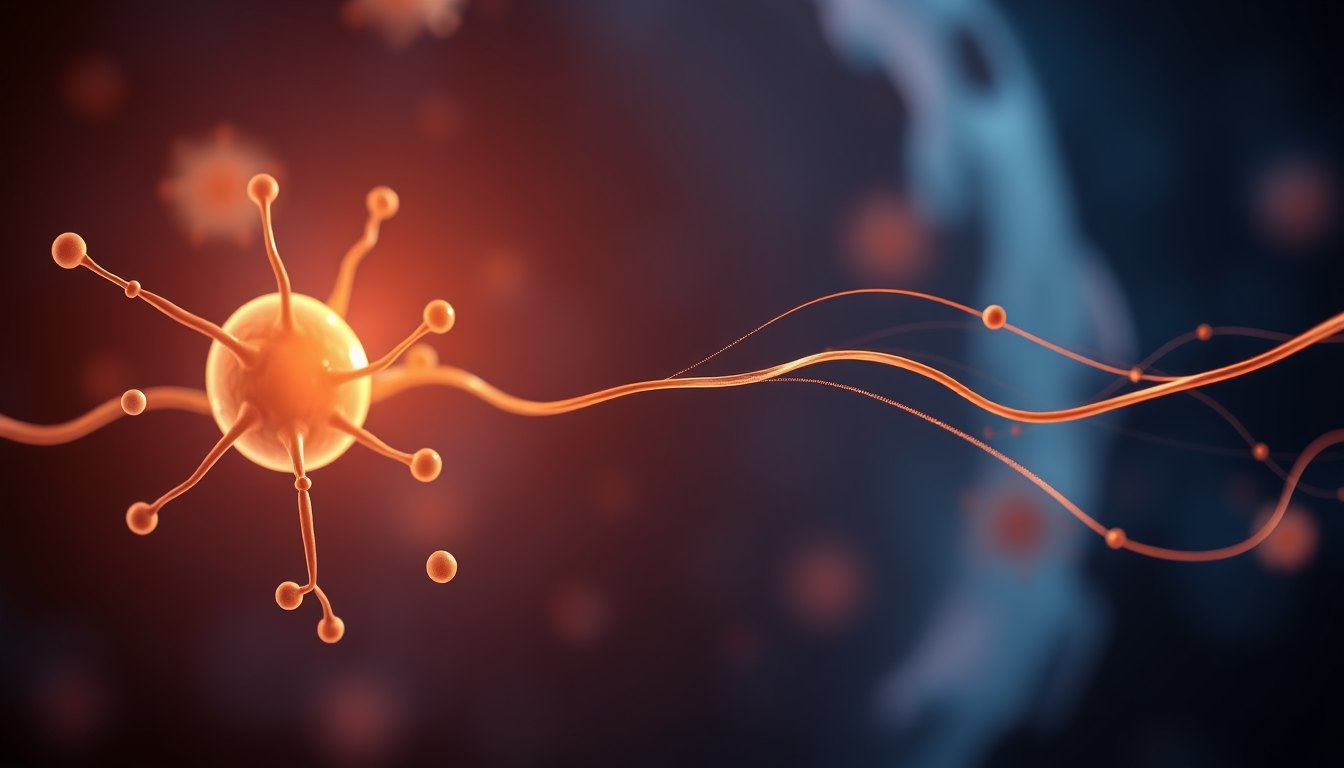
Growth factors are secreted signalling proteins that bind cell-surface receptors and influence whether cells divide, differentiate, migrate or survive. Families include the fibroblast growth factors, insulin-like growth factors, vascular and angiogenic growth factors, and neurotrophic factors. Published reviews describe roles in skeletal development, wound repair, blood vessel formation, nervous system injury and cancer biology, and describe measurement in tissue, serum and cell culture. This page summarises what those studies reported; it is educational and does not describe any protocol or product.
What growth factors are
Growth factors are naturally occurring proteins or polypeptides that carry instructions between cells. They are released by one cell, travel a short distance through tissue fluid or the bloodstream, and bind a matching receptor on the surface of a target cell. That binding switches on signalling cascades inside the cell that influence whether it divides, matures into a specialised cell type, migrates, produces matrix, or stays alive. A 2020 review of cytokines and growth factors described both classes as soluble protein mediators that act at very low concentrations through specific receptors to regulate proliferation, differentiation and survival in cultured cells and in tissues (PMID 31384960).
The boundary between "growth factor" and "cytokine" is historical rather than chemical. Most growth factors were named for the first activity someone observed — fibroblast growth factor for its effect on fibroblasts, nerve growth factor for its effect on neurons — even though later work usually showed each molecule acts on many cell types. This page is for educational purposes only and is not medical advice; consult a licensed physician about any health question or before making any medical decision.
Where growth factors come from in the body
There is no single growth-factor gland. Production is distributed: platelets release stored factors when they degranulate at a wound, macrophages and other immune cells secrete them during inflammation, fibroblasts and endothelial cells produce them in connective tissue and vessel walls, the liver is a major source of circulating insulin-like growth factor, and bone, cartilage, placenta and nervous tissue each make their own local repertoire. Many factors are also stored bound to the extracellular matrix, particularly to heparan sulfate chains, and are liberated when the matrix is remodelled. Chemistry work on sulfated oligosaccharides carrying an anomeric fluorinated tail examined exactly this kind of carbohydrate–protein interaction, and the researchers reported that the synthetic compounds bound growth factors in binding assays (PMID 37879181).
Major families and what the literature describes
| Family | Context described in the cited literature |
|---|---|
| Fibroblast growth factors (FGF) | A 2019 review described FGF signalling as a regulator of skeletal development, including limb bud outgrowth, growth-plate cartilage and bone formation (PMID 30902253). |
| Insulin-like growth factors (IGF-1, IGF-2) | A 2020 review covered IGF signalling across development, cancer biology and ageing, and reported that the same pathway that drives growth in early life is implicated in tumour biology and lifespan regulation (PMID 33080771). |
| Angiogenic growth factors | A veterinary histochemistry study examined expression of angiogenic growth factors in canine squamous cell cancers and reported differences in staining between tumour and reference tissue (PMID 33006294). |
| Neurotrophic and related factors | A 2006 review of growth factors and stroke summarised preclinical work on growth-factor signalling in ischaemic brain injury and repair (PMID 17012059). |
| Repair-associated factors | A 2022 Chinese-language review discussed the regulation of wound repair by growth factors and reported on their use in clinical wound management research (PMID 35899329). |
Doing the math on a vial? The PeptideU app does reconstitution, units and dilution for you.
Try it freeWhat growth factors do in the body
Building and maintaining the skeleton
Skeletal tissue depends on tightly timed signalling. The 2019 developmental-biology review reported that FGF ligands and their receptors coordinate cartilage and bone formation, and that mutations affecting FGF receptor signalling underlie recognised human skeletal disorders (PMID 30902253).
Wound repair and tissue regeneration
Repair proceeds through overlapping inflammatory, proliferative and remodelling phases, and growth factors are described as the messengers linking them. A 2022 review reported that engineered growth factors have been studied and applied in trauma and burn management in China as part of a research and translation programme (PMID 35012265). A companion review on wound repair reported that growth-factor regulation of healing has progressed from laboratory characterisation toward clinical wound care, while raising unresolved questions about delivery and timing (PMID 35899329).
Blood vessel formation
New capillaries are needed for growth, healing and, unhelpfully, for tumours. Researchers reported detectable expression of angiogenic growth factors in canine squamous cell carcinoma tissue, consistent with the broader idea that tumours recruit vasculature through these signals (PMID 33006294).
Reproductive and developmental biology
A 2016 review in a clinical obstetrics and gynaecology journal examined growth factors and pathogenesis, describing how altered growth-factor signalling has been linked to disease processes in reproductive tissue (PMID 26527305).
How growth factors are measured and studied
Common approaches in the published literature include immunoassays of serum or plasma, immunohistochemical staining of tissue sections, gene-expression measurement, receptor-binding assays, and cell-culture experiments in which a factor is added to a defined medium. The bioprocess review noted that recombinant cytokines and growth factors are routinely supplied to cultured cells to direct their behaviour, which is why they are central to cell-therapy and biomanufacturing methods (PMID 31384960). Circulating-level studies extend into psychiatry: a 2017 review of alterations of growth factors in autism and attention-deficit/hyperactivity disorder reported that several growth factors have been measured at altered concentrations in these populations, while noting inconsistency across studies (PMID 28751869).
Tracking research? Log entries with dates, lots and notes — records, never plans.
Get the appWhy the term matters to peptide readers
Many compounds discussed in peptide literature are either growth factors themselves, fragments of them, or molecules said to influence their release or binding. Understanding the underlying physiology — that these are receptor-mediated signals with broad, context-dependent effects — explains why researchers treat them as double-edged. The IGF review reported that the same signalling that supports growth and tissue maintenance is also implicated in cancer biology and ageing, which is why growth-factor pathways are studied both as repair targets and as oncology targets (PMID 33080771). Consistent with that, a 2017 oncology review examined targeting of growth factors in hepatocellular carcinoma and reported that polysaccharide compounds have been investigated for their ability to interfere with growth-factor signalling in that disease (PMID 28454283).
Growth factors in applied settings: What Studies Report
Beyond the laboratory, growth factors appear in surgical and dental research. A 2025 review of growth factors and osseointegration in dental implants reported that growth factors have been studied as adjuncts intended to influence bone–implant integration (PMID 41393465). In neurology, the stroke review reported that growth factors were investigated in experimental models of ischaemic injury for effects on neuronal survival and repair, while emphasising translational obstacles such as delivery across the blood–brain barrier (PMID 17012059).
Limits of the current evidence
- Much of the mechanistic work is in cell culture or animal models, including veterinary tumour tissue (PMID 33006294).
- Circulating growth-factor measurements in neurodevelopmental conditions were reported as inconsistent between studies (PMID 28751869).
- Reviews of wound repair reported that delivery, stability and timing remain open questions rather than settled practice (PMID 35899329).
None of the material above describes a protocol, and none of the cited reviews should be read as endorsement of any particular use outside of the clinical and regulatory contexts they describe.
Want the full course? Every compound, evidence-graded and cited, inside PeptideU.
Start learning freeReferences
- Growth factors and pathogenesis (Best Practice & Research Clinical Obstetrics & Gynaecology, 2016)
- Cytokines and Growth Factors (Advances in Biochemical Engineering/Biotechnology, 2020)
- Insulin-Like Growth Factors in Development, Cancers and Aging (Cells, 2020)
- Alterations of Growth Factors in Autism and Attention-Deficit/Hyperactivity Disorder (Frontiers in Psychiatry, 2017)
- Expression of angiogenic growth factors in canine squamous cell cancers (Biotechnic & Histochemistry, 2021)
- Fibroblast growth factors in skeletal development (Current Topics in Developmental Biology, 2019)
- Growth factors and stroke (NeuroRx, 2006)
- Growth factors and osseointegration in dental implants - A review (Bioinformation, 2025)
- Progress and thoughts on the regulation of wound repair by growth factors (Chinese Journal of Burns and Wounds, 2022)
- Synthesis and interaction with growth factors of sulfated oligosaccharides containing an anomeric fluorinated tail (Bioorganic Chemistry, 2023)
- Targeting of growth factors in the treatment of hepatocellular carcinoma: The potentials of polysaccharides (Oncology Letters, 2017)
- Establishment of "Chinese way" for trauma and burn management based on the engineered growth factors research and application (Chinese Journal of Burns and Wounds, 2022)
Frequently asked questions
What are growth factors in simple terms?▾
They are secreted proteins that act as short-range messengers between cells. A growth factor binds a matching receptor on a target cell and triggers internal signalling that influences division, differentiation, migration or survival. A 2020 review described cytokines and growth factors as soluble mediators active at very low concentrations through specific receptors (PMID 31384960), which is why small changes in signalling can have large tissue-level consequences.
Are growth factors the same as hormones or cytokines?▾
They overlap. Hormones classically travel through blood from a gland to distant targets, while growth factors often act locally on neighbouring cells, though some circulate. The distinction from cytokines is largely historical: a 2020 review grouped cytokines and growth factors together as receptor-binding protein mediators regulating proliferation, differentiation and survival (PMID 31384960).
Which growth factor families are most studied?▾
Fibroblast growth factors, insulin-like growth factors, angiogenic factors and neurotrophic factors appear repeatedly. A 2019 review reported that FGF signalling coordinates skeletal development (PMID 30902253), and a 2020 review reported that insulin-like growth factor signalling spans development, cancer biology and ageing (PMID 33080771). Angiogenic factor expression was examined in canine squamous cell tumour tissue (PMID 33006294).
How are growth factors measured in research?▾
Studies use immunoassays of blood, immunohistochemical staining of tissue, gene-expression analysis, receptor-binding assays and cell-culture experiments. A 2017 review reported that several growth factors have been measured at altered concentrations in autism and ADHD populations, while noting inconsistency across studies (PMID 28751869). Binding-based chemistry work also reported synthetic sulfated oligosaccharides interacting with growth factors (PMID 37879181).
Why are growth factors discussed in wound healing research?▾
Repair depends on coordinated signalling between immune cells, fibroblasts and endothelial cells. A 2022 review reported on progress in regulating wound repair with growth factors and on unresolved delivery questions (PMID 35899329), and a companion review reported that engineered growth factors have been studied and applied in trauma and burn management programmes (PMID 35012265).
Why are growth factors also studied in cancer?▾
Because the same signals that support growth and repair can support tumour growth and blood supply. A 2020 review reported that insulin-like growth factor signalling is implicated in cancer biology as well as development and ageing (PMID 33080771), and a 2017 review examined targeting growth factors in hepatocellular carcinoma using polysaccharide compounds (PMID 28454283).
Do growth factors have a role in the nervous system?▾
Yes. Neurotrophic and related factors influence neuronal survival, connectivity and repair. A 2006 review reported that growth factors were investigated in experimental models of ischaemic stroke for effects on neuronal survival and repair, while emphasising translational obstacles including delivery across the blood-brain barrier (PMID 17012059). This page is educational and not medical advice.
Track it. Calculate it. Actually understand it.
References
This page summarises published research for education — it is not medical advice, and nothing here is a recommendation to use, purchase, or dose any substance. Study parameters described are what researchers reported, not instructions. Consult a qualified clinician before any health decision.