
Polypeptide vs Protein: How They Differ
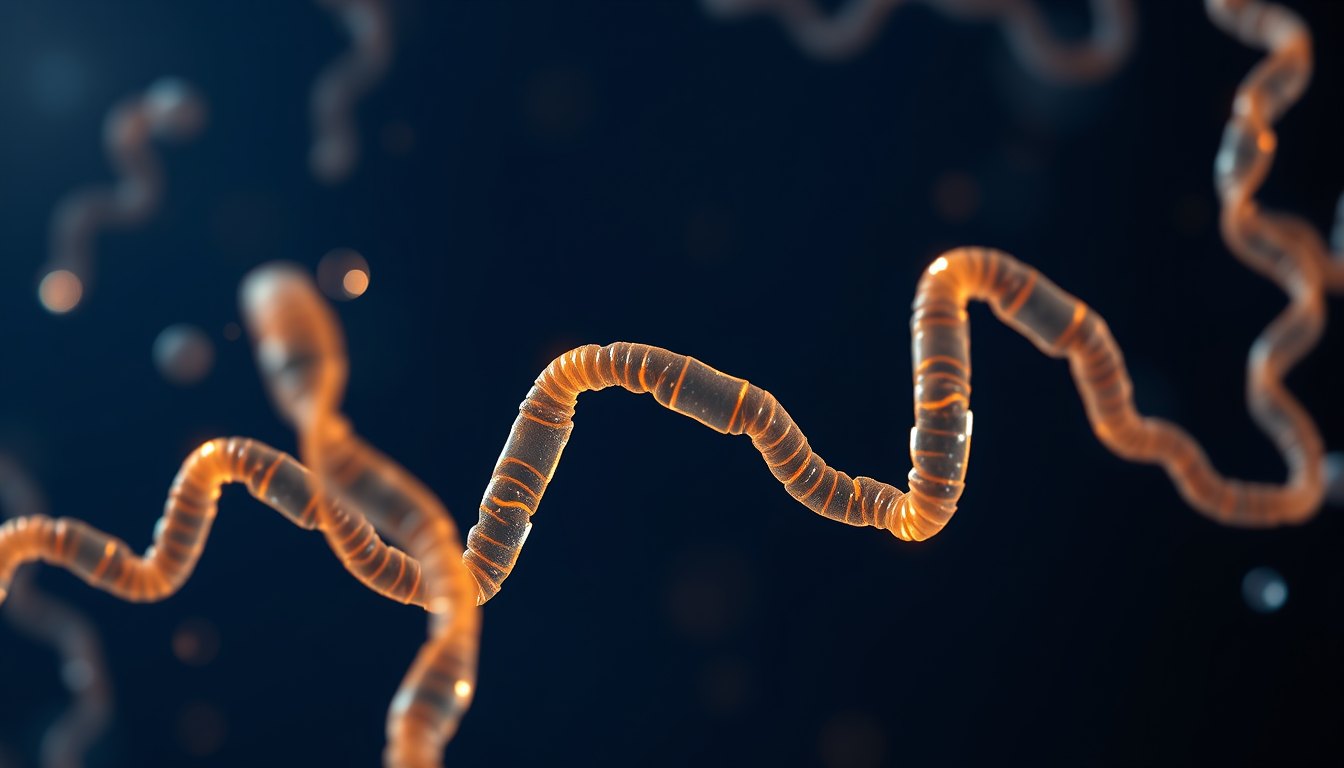
A polypeptide is one chain of amino acids linked by peptide bonds. A protein is a working molecule made of one or more folded chains, often with chemical modifications or partner subunits. Every protein contains at least one polypeptide, but not every polypeptide is called a protein. Chain length conventions are informal, folding is what turns a chain into a functional form, and the two words overlap in ordinary scientific writing, so usage varies by field and author.
The short answer
A polypeptide is a single chain of amino acids joined end to end by peptide bonds. A protein is a functional molecule built from one or more of those chains once the chain has folded into a defined three dimensional shape, and often after it has gained chemical modifications or joined with partner chains. Every protein contains at least one polypeptide. Not every polypeptide is routinely called a protein. The two words overlap a great deal in everyday scientific writing, and usage genuinely varies between textbooks, journals and research fields.
This page is for educational purposes only and is not medical advice; consult a licensed physician with any personal health question. Nothing here describes what anyone should take or do.
Plain language first
Think of amino acids as beads and the peptide bond as the knot that ties one bead to the next. A short string of beads is usually called a peptide. A long string is usually called a polypeptide. The word protein points less at the string itself and more at what the string becomes: a folded, working object with a job to do, sometimes assembled from several strings at once.
So the difference is partly about length and partly about level of description. Polypeptide describes a covalent chain. Protein describes a functional unit. A chemist describing the order of residues may say polypeptide chain; a cell biologist describing the same molecule doing work in a membrane may say protein. Both can be correct about the same object at the same moment.
For the separate question of how single amino acids relate to short peptides, see the companion guide on amino acids vs peptides.
Side by side comparison
| Feature | Peptide | Polypeptide | Protein |
|---|---|---|---|
| What the word names | A short chain of amino acids | A single continuous chain, usually long | A functional molecule of one or more folded chains |
| Typical length convention | Roughly 2 to about 50 residues, informally | Roughly 50 residues upward, informally | No fixed minimum; defined by function, not count |
| Folding implied? | Often not; many short chains are flexible | Not necessarily; the term can describe an unfolded chain | Usually yes, a defined or partly defined shape is implied |
| More than one chain? | No | No, by definition one chain | Yes, many proteins have several subunits |
| Chemical modifications | Sometimes | Described separately from the chain itself | Frequently part of the mature description |
| Common usage | Chemistry, signalling molecules, hormones | Translation, chain transport, sequence description | Cell biology, structural biology, physiology |
Doing the math on a vial? The PeptideU app does reconstitution, units and dilution for you.
Try it freeChain length conventions, and why they are soft
No international committee enforces a residue count that separates peptide from polypeptide from protein. The commonly quoted boundary near 50 amino acids is a teaching convenience rather than a rule of chemistry. Short chains can still be tightly structured: researchers examining AAI, the major alpha amylase inhibitor from amaranth seeds, reported on the structure and oxidative folding of this small inhibitor, in which disulfide bond formation accompanies the folding process (PMID 32257998). A molecule can therefore be short enough to be called a peptide by length yet behave like a compact protein in structural terms.
The opposite also happens. Long chains need not be well ordered. A 2021 review in Biophysical Reviews described intrinsically disordered regions as a normal part of the protein world rather than an exception, with chains that sample many conformations instead of settling into one fixed structure (PMID 35059033). Length alone predicts neither order nor function.
Do polypeptides make proteins?
Yes, in the sense that the polypeptide is the raw product and the protein is the finished state. The ribosome links amino acids into a chain, and the chain then has to reach the right compartment and adopt the right shape.
Getting the chain to the right place
Transport often begins while the chain is still being made. A 2023 review in Cold Spring Harbor Perspectives in Biology described how the Sec61 translocon complex moves polypeptides across the endoplasmic reticulum membrane and inserts membrane spanning segments into the lipid bilayer (PMID 35940906). Bacteria face a comparable problem at the outer membrane, and researchers reviewing the Omp85 superfamily described these proteins as outer membrane protein assembly factors and polypeptide transporters (PMID 35650668). The vocabulary in both reviews is instructive: the moving object is called a polypeptide, while the finished, seated molecule is called a protein.
Folding while the chain emerges
Folding is frequently co translational, meaning the front of the chain begins to fold before the back has been synthesised. A 2020 review of chloroplasts described co translational folding and sorting of newly made chains, with folding factors acting close to the ribosome (PMID 32045984). A 2022 review in Biochemistry (Moscow) covered biosynthetic protein folding and the molecular chaperones that accompany it (PMID 35501992).
Chaperones and folding catalysts
Cells do not leave folding to chance. An Annual Review of Biochemistry article described molecular chaperone functions in protein folding and in proteostasis, the broader balance of synthesis, folding and clearance (PMID 23746257). A 2022 review in MedComm surveyed heat shock proteins and reported on their biological functions, their pathological roles and the therapeutic interest they have attracted (PMID 35928554). Within that family, a 2019 review in Biochemical Pharmacology discussed targeting Hsp90 family members as a strategy intended to promote cancer cell death (PMID 30981878). Separate enzymes speed specific steps: a review of chloroplast immunophilins described this group of peptidyl prolyl isomerases and their roles in the chloroplast (PMID 25963286).
The practical point for vocabulary is that the chain and the functional molecule are different stages, and the literature often marks that difference by switching words partway through a sentence.
Tracking research? Log entries with dates, lots and notes: records, never plans.
Get the appMulti chain proteins: when one protein is several polypeptides
Many proteins are assemblies. Haemoglobin, antibodies, ion channels and large enzyme complexes each contain more than one chain held together by non covalent contacts and sometimes by disulfide bonds. Each chain is a polypeptide with its own sequence, and sometimes its own gene. The assembled object is the protein.
This is the clearest case where the two words cannot be swapped. Saying that a four subunit enzyme is one polypeptide would be wrong, because polypeptide counts chains. Saying it is one protein is right, because protein counts functional units. Assembly is also a regulated step: the Omp85 review described dedicated machinery that both transports chains and assembles them into the outer membrane (PMID 35650668).
Why the terms overlap, stated plainly
- No fixed cut off exists. The 50 residue line is a convention and different sources draw it differently.
- Authors choose emphasis. Polypeptide emphasises the covalent chain; protein emphasises the working molecule.
- The same molecule changes category over time. A chain leaving the ribosome and threading through the Sec61 translocon is described as a polypeptide (PMID 35940906), and the same sequence once folded and seated is described as a protein.
- Disorder blurs the boundary. Chains that never adopt a single fixed structure are still called proteins in the literature on disordered regions (PMID 35059033).
- Fields differ. Peptide chemistry, structural biology and cell biology each have habits of usage that are internally consistent but not identical.
Want the full course? Every compound, evidence-graded and cited, inside PeptideU.
Start learning freeWhen folding goes wrong: What Studies Report
The difference between a chain and a correctly folded protein matters biologically, not only linguistically. A 2023 review in Nature Reviews Molecular Cell Biology described mechanisms of protein misfolding and aggregation and the pathology associated with them (PMID 37684425). When unfolded or misfolded chains accumulate inside the endoplasmic reticulum, cells mount a stress response, and a 2023 review in Hepatology examined endoplasmic reticulum stress in liver diseases (PMID 35524448). The chaperone literature frames this as a proteostasis problem, in which folding, refolding and clearance are kept in balance (PMID 23746257), and the heat shock protein review described both protective and pathological roles for these factors (PMID 35928554). These are descriptions of cell biology reported in reviews, not statements about any individual person's health.
How to read the words in a paper
- Look at what is being counted. If the sentence counts chains or residues, polypeptide is the precise word.
- Look for a function claim. If the sentence describes catalysis, binding or transport, protein is usually the word in play.
- Check the stage of the life story. Synthesis, translocation and folding sections tend to say polypeptide; mature structure and activity sections tend to say protein, as seen across the translocon and chaperone literature (PMID 35940906, PMID 35501992).
- Do not infer size from the word. Short disulfide rich molecules can be highly structured, as the study of AAI from amaranth seeds reported (PMID 32257998).
Key takeaways
- Polypeptide names a single amino acid chain; protein names a functional molecule of one or more folded chains.
- The length boundary is a convention, not a law, and sources differ.
- Folding, modification and assembly convert chains into proteins, assisted by chaperones and folding catalysts described in the reviews cited above (PMID 23746257, PMID 25963286).
- Multi subunit proteins are the clearest case where the words are not interchangeable.
- Failure of folding is studied as a disease relevant process in its own right (PMID 37684425).
This page summarises published biochemistry for general education. It is not medical advice, it does not describe any product, and personal health questions belong with a licensed physician.
References
- Molecular chaperone functions in protein folding and proteostasis (Annual Review of Biochemistry, 2013)
- Endoplasmic reticulum stress in liver diseases (Hepatology, 2023)
- Mechanisms and pathology of protein misfolding and aggregation (Nature Reviews Molecular Cell Biology, 2023)
- Mechanism of Protein Translocation by the Sec61 Translocon Complex (Cold Spring Harbor Perspectives in Biology, 2023)
- Heat shock proteins: Biological functions, pathological roles, and therapeutic opportunities (MedComm, 2022)
- Chloroplast immunophilins (Protoplasma, 2016)
- The protein disorder cycle (Biophysical Reviews, 2021)
- Structure and Oxidative Folding of AAI, the Major Alfa-Amylase Inhibitor From Amaranth Seeds (Frontiers in Chemistry, 2020)
- Targeting hsp90 family members: A strategy to improve cancer cell death (Biochemical Pharmacology, 2019)
- Biosynthetic Protein Folding and Molecular Chaperons (Biochemistry (Moscow), 2022)
- Function of the Omp85 Superfamily of Outer Membrane Protein Assembly Factors and Polypeptide Transporters (Annual Review of Microbiology, 2022)
- Co-Translational Protein Folding and Sorting in Chloroplasts (Plants, 2020)
Frequently asked questions
Is a polypeptide the same thing as a protein?▾
Not exactly. Polypeptide names a single chain of amino acids, while protein names a functional molecule that may contain several folded chains. The words overlap because the same molecule is often called a polypeptide during synthesis and transport, as in reviews of the Sec61 translocon (PMID 35940906), and a protein once folded and working (PMID 23746257).
How long must a chain be before it counts as a protein?▾
There is no enforced threshold. The frequently quoted figure of roughly 50 amino acids is a teaching convention. Function and structure matter more than residue count: researchers reported that AAI, a small amylase inhibitor from amaranth seeds, has a defined structure formed through oxidative folding (PMID 32257998), so a short chain can still behave like a compact protein.
Do polypeptides make proteins?▾
Yes, in the sense that a polypeptide is the raw chain and a protein is the finished state. Chains are transported and folded with help from dedicated machinery, including the Sec61 translocon described in a 2023 review (PMID 35940906) and chaperones described in reviews of biosynthetic folding (PMID 35501992) and proteostasis (PMID 23746257).
What is the difference between a peptide and a polypeptide?▾
Both are chains of amino acids joined by peptide bonds. Peptide usually implies a short chain, and polypeptide usually implies a longer one, but the boundary is informal and authors differ. Bacterial transport reviews use polypeptide for chains being moved and assembled into membranes (PMID 35650668), which shows how the word tracks the chain rather than its size.
Can a protein have more than one polypeptide chain?▾
Yes. Many proteins are assemblies of two or more chains, each with its own sequence, held together by non covalent contacts and sometimes disulfide bonds. Assembly is an organised process, and a 2022 review described Omp85 family factors that both transport chains and assemble outer membrane proteins (PMID 35650668).
Must every protein fold into one fixed shape?▾
No. A 2021 review described intrinsically disordered regions as a widespread feature of proteins, with chains sampling many conformations rather than one fixed structure (PMID 35059033). Folding is nonetheless tightly supervised in cells, and reviews of molecular chaperones describe how folding and clearance are kept in balance (PMID 23746257).
Why does misfolding matter in biology?▾
Because function depends on shape. A 2023 review examined mechanisms and pathology of protein misfolding and aggregation (PMID 37684425), and a 2023 review in Hepatology examined endoplasmic reticulum stress in liver diseases (PMID 35524448). These are descriptions of cell biology; any personal health question belongs with a licensed physician.
Track it. Calculate it. Actually understand it.
References
This page summarises published research for education. It is not medical advice, and nothing here is a recommendation to use, purchase, or dose any substance. Study parameters described are what researchers reported, not instructions. Consult a qualified clinician before any health decision.