
How Does Magainin Work? Mechanism and What Studies Report
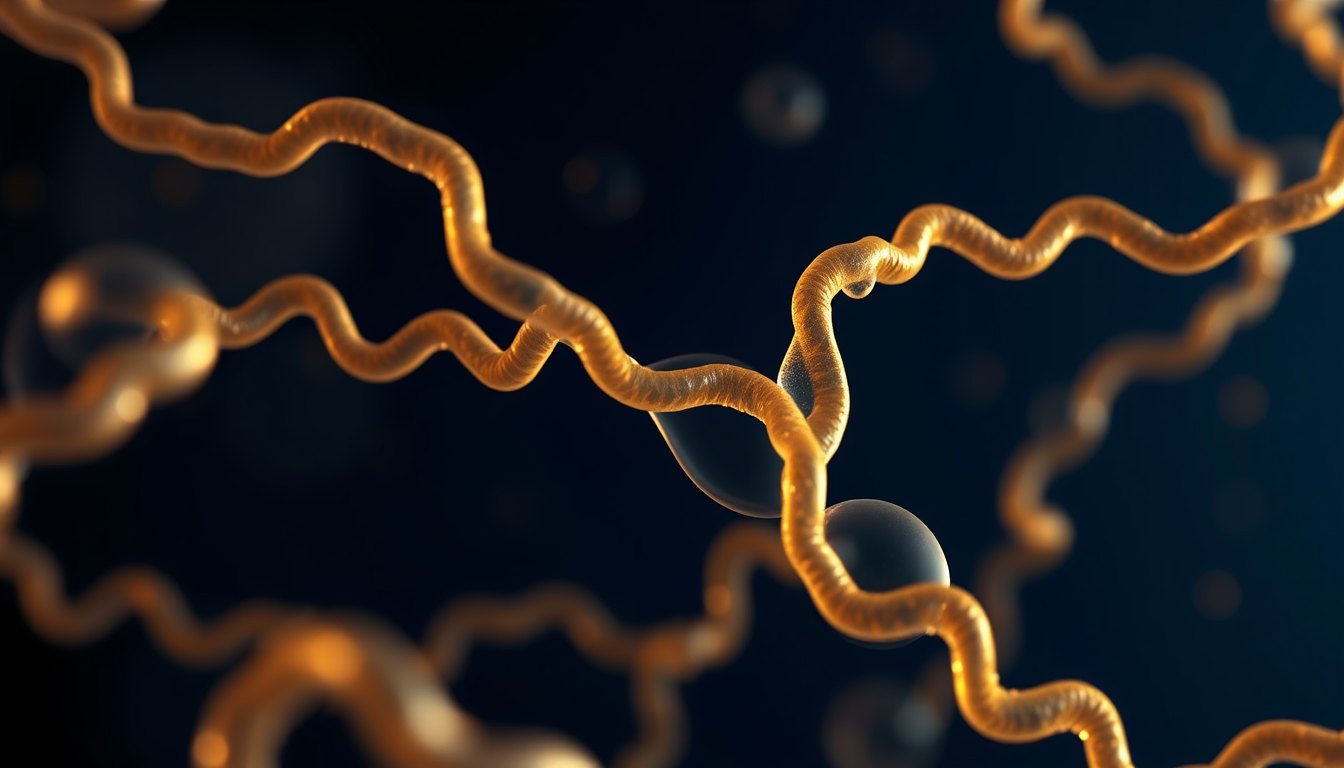
Magainin is an amphibian-derived antimicrobial peptide studied as a research compound. It is not an approved medicine. Published work is overwhelmingly preclinical and biophysical: laboratory studies measured how the peptide folds into a helix on contact with negatively charged lipids, how it permeabilises or ruptures model membranes, how lipid composition changes that behaviour, and whether it also engages a bacterial outer membrane protein machine. This page summarises the proposed pathway and the design of the studies that examined it.
The short answer, in plain language
Magainin is a short, positively charged peptide originally identified in amphibian skin secretions, and it is not an approved medicine. It is handled in the literature as a research and investigational compound, studied mostly in test tubes, artificial membranes and bacterial cultures rather than in people. Background on its discovery and research status sits on the Magainin hub page.
The proposed mechanism described across the published literature is physical rather than classically enzymatic. In water the peptide is largely unstructured. When it meets a membrane rich in negatively charged lipids, the kind that dominates many bacterial surfaces, it folds into a helix with charged residues on one face and greasy residues on the other. That lopsided helix inserts into the lipid layer, strains it, and at sufficient local density allows water and ions to cross a barrier that is normally sealed. A separate line of work has asked whether the peptide also interferes with a bacterial protein-folding machine in the outer membrane, which would add a non-lytic component to the picture.
This page is for educational purposes only and is not medical advice; consult a licensed physician for any question about your own health. Nothing below is a protocol, a recommendation or a statement about what any compound does in a person.
Why charge and lipid composition are the starting point
Explanations of magainin activity begin with electrostatics. The peptide carries net positive charge; bacterial membrane models are built around anionic lipids such as phosphatidylglycerol and cardiolipin. A 2021 study in phosphatidylglycerol-based bacterial membrane models reported that adding cardiolipin prevented pore formation that otherwise occurred, indicating that the lipid mixture itself, not only the peptide, determines whether permeabilisation happens (PMID 34633077). The same study framework treats the membrane as an active participant rather than a passive target (PMID 34633077).
A 2023 experiment took this to single-vesicle resolution, using giant unilamellar vesicles made from Escherichia coli polar lipid extract and watching individual vesicles under the microscope; the researchers reported magainin 2 induced rupture of these single giant unilamellar vesicles, allowing the event to be timed vesicle by vesicle rather than averaged across a population (PMID 36567034). Single-vesicle designs matter because bulk leakage assays cannot distinguish a few catastrophically destroyed vesicles from many mildly leaky ones (PMID 36567034).
What happens to the peptide's shape
The folding step has been examined directly. A 2009 review of solution nuclear magnetic resonance studies of amphibian antimicrobial peptides examined how structural data obtained in membrane-mimicking environments have been linked, with caveats, to antimicrobial function (PMID 19272309). The review title itself poses the open question of whether structure reliably predicts function, which is a useful corrective to simplified diagrams (PMID 19272309).
Most structural work uses simplified mimics such as micelles or bicelles. A 2014 study compared hydrophobic and amphipathic antimicrobial peptides interacting with lipid bicelles, a disc-shaped model that preserves a flat bilayer region while staying small enough for solution spectroscopy (PMID 24863176). Because bicelles are not bacteria, findings from them describe peptide-lipid physics rather than killing in a living organism (PMID 24863176).
Work on actual cells has also been attempted. A 2014 report applied circular dichroism spectroscopy to antimicrobial peptides in the presence of intact bacterial cells rather than synthetic liposomes, so that conformational change could be followed in a more realistic environment (PMID 24618744). That design addresses a persistent criticism of model membrane studies, which is that real envelopes contain proteins, lipopolysaccharide and a cell wall (PMID 24618744).
Doing the math on a vial? The PeptideU app does reconstitution, units and dilution for you.
Try it freePores, curvature strain and mechanical change
The mechanistic vocabulary used in this field includes barrel-stave pores, toroidal pores in which lipids bend to line the opening, and carpet-like surface disruption. A 2006 study published under the title "Antimicrobial peptides in action" examined peptide-membrane interactions to distinguish between such modes of action (PMID 16967965).
A mechanical angle comes from a 2025 study that applied nano-viscosimetry analysis to magainin 2 interactions with model membranes, measuring how the peptide altered the physical properties of the lipid environment rather than only whether dye leaked out (PMID 39798207). Viscosity-based readouts capture changes in membrane fluidity and packing that precede or accompany frank rupture (PMID 39798207).
Curvature strain is a related concept. A 2018 biophysical study reported that synergism between antimicrobial frog peptides was coupled to membrane intrinsic curvature strain, linking the combined effect of two peptides to the mechanical tendency of the lipid layer to bend (PMID 29694871). Synergy between magainin 2 and its partner peptide PGLa is one of the most studied cooperative effects in this literature, and the 2018 study tied it to lipid physics rather than to a shared receptor (PMID 29694871).
Comparable biophysical tools have been used on unrelated membrane-active proteins, which helps calibrate interpretation. A 2024 study reported that the HIV-1 Gag polyprotein modulated membrane physical properties in a surfactant-like manner, with the authors discussing implications for virus assembly (PMID 38917054). The comparison illustrates that surfactant-like membrane perturbation is a general physical behaviour, not a property unique to antimicrobial peptides (PMID 38917054).
A possible protein target, not only lipids
Membrane disruption is not necessarily the whole story. A 2022 study reported that magainin 2 interacted with BamA and impaired the folding of E. coli membrane proteins, pointing to engagement with the beta-barrel assembly machinery of the outer membrane (PMID 36324521). If a peptide can disturb outer membrane protein biogenesis, the resulting envelope stress would be a mechanism distinct from immediate lysis (PMID 36324521). That study was conducted in bacterial and biochemical systems, so it describes a molecular interaction in E. coli, not an outcome in any animal or person (PMID 36324521).
Tracking research? Log entries with dates, lots and notes: records, never plans.
Get the appWhat each model system can and cannot show
| System studied | What researchers measured | Example citation |
|---|---|---|
| Phosphatidylglycerol bacterial membrane models | Whether pore formation occurred and how cardiolipin changed it | PMID 34633077 |
| Single giant unilamellar vesicles from E. coli polar lipids | Rupture of individual vesicles exposed to magainin 2 | PMID 36567034 |
| Model membranes with nano-viscosimetry | Changes in membrane physical properties during peptide interaction | PMID 39798207 |
| Lipid bicelles | Interaction behaviour of hydrophobic versus amphipathic peptides | PMID 24863176 |
| Intact bacterial cells with circular dichroism | Peptide conformation in the presence of living bacteria | PMID 24618744 |
| E. coli outer membrane protein folding assays | Interaction with BamA and folding impairment | PMID 36324521 |
Designing molecules around the same principle
Because the proposed mechanism depends on charge, helicity and amphipathicity rather than on a precise natural sequence, chemists have built synthetic analogues that imitate those features. A 2015 study described helical antimicrobial sulfono-gamma-AApeptides, a class of peptidomimetics designed to reproduce the amphipathic helical architecture associated with natural antimicrobial peptides (PMID 26020456). A 2013 study used an iterative selection strategy to pick antimicrobial candidates from informed d-/l-peptide dimer libraries, combining natural and mirror-image amino acids in screening (PMID 24151156). Both are discovery-stage chemistry reports in laboratory systems, and neither described a clinical product (PMID 26020456, PMID 24151156).
Want the full course? Every compound, evidence-graded and cited, inside PeptideU.
Start learning freeSafety and Adverse Events: What Studies Report
The literature summarised on this page is biophysical and microbiological. The cited reports measured vesicle rupture, membrane viscosity, peptide conformation, curvature strain and bacterial protein folding; they did not report clinical safety outcomes, human tolerability data or adverse event rates (PMID 36567034, PMID 39798207, PMID 36324521). A general caution raised by the mechanism itself is selectivity: the peptide acts on lipid bilayers, and the 2021 model membrane study showed that altering lipid composition alone changed whether pores formed, which illustrates how sensitive the effect is to the membrane encountered (PMID 34633077). Any question about safety in a person is a matter for a licensed clinician, not for an educational summary.
Limits of the current evidence
- Model systems are simplifications. Vesicles and bicelles lack cell walls, lipopolysaccharide and membrane proteins, a gap the circular dichroism work with intact bacteria was designed to narrow (PMID 24618744).
- Structure does not automatically explain function. The 2009 nuclear magnetic resonance review raised this directly in its framing (PMID 19272309).
- More than one mechanism may operate. Lipid-level disruption and interaction with BamA are different processes reported in different experimental settings (PMID 36324521, PMID 16967965).
- Combinations behave differently from single peptides. The reported synergy between frog peptides was attributed to membrane curvature strain, so results from one peptide alone do not transfer to mixtures (PMID 29694871).
- The evidence base is preclinical. None of the studies cited here was a human clinical trial.
Related reading
- Magainin: research overview and status
- Antimicrobial peptides: physiology background
- Glossary: defensin
References
- Helical Antimicrobial Sulfono-γ-AApeptides (Journal of Medicinal Chemistry, 2015)
- Cardiolipin prevents pore formation in phosphatidylglycerol bacterial membrane models (FEBS Letters, 2021)
- Antimicrobial peptide magainin 2-induced rupture of single giant unilamellar vesicles comprising E. coli polar lipids (Biochimica et Biophysica Acta Biomembranes, 2023)
- Nano-viscosimetry analysis of membrane disrupting peptide magainin2 interactions with model membranes (Biophysical Chemistry, 2025)
- Solution NMR studies of amphibian antimicrobial peptides: linking structure to function? (Biochimica et Biophysica Acta, 2009)
- Antimicrobial peptides in action (Journal of the American Chemical Society, 2006)
- Circular Dichroism studies on the interactions of antimicrobial peptides with bacterial cells (Scientific Reports, 2014)
- Synergism of Antimicrobial Frog Peptides Couples to Membrane Intrinsic Curvature Strain (Biophysical Journal, 2018)
- Iterative antimicrobial candidate selection from informed d-/l-Peptide dimer libraries (ChemBioChem, 2013)
- Human Immunodeficiency Virus Type 1 Gag Polyprotein Modulates Membrane Physical Properties like a Surfactant: Potential Implications for Virus Assembly (ACS Infectious Diseases, 2024)
- The antimicrobial peptide Magainin-2 interacts with BamA impairing folding of E. coli membrane proteins (Frontiers in Chemistry, 2022)
- Interaction of hydrophobic and amphipathic antimicrobial peptides with lipid bicelles (Journal of Peptide Science, 2014)
Frequently asked questions
Is magainin an approved medicine?▾
No. Magainin is handled in the published literature as a research and investigational compound, not an approved medicine, and the studies summarised here were laboratory investigations rather than clinical trials. They measured events such as rupture of single giant unilamellar vesicles made from E. coli lipids (PMID 36567034) and interaction with the outer membrane protein BamA in E. coli (PMID 36324521).
What is the proposed mechanism of magainin?▾
The most widely described mechanism is physical interaction with negatively charged lipid membranes, leading to permeabilisation or rupture. Studies examined peptide-membrane interactions to distinguish pore-forming from carpet-like modes of action (PMID 16967965), and reported that magainin 2 ruptured single giant unilamellar vesicles built from E. coli polar lipids (PMID 36567034). Separate work reported interaction with BamA affecting membrane protein folding (PMID 36324521).
Does membrane lipid composition change what researchers observe?▾
Yes. In phosphatidylglycerol-based bacterial membrane models, researchers reported that adding cardiolipin prevented pore formation that otherwise occurred (PMID 34633077). A 2025 study used nano-viscosimetry to measure how magainin 2 altered the physical properties of model membranes (PMID 39798207). These findings indicate the lipid environment, not the peptide alone, shapes the observed outcome.
Has magainin been studied in living bacteria rather than artificial membranes?▾
Some work has moved beyond liposomes. A circular dichroism study examined antimicrobial peptide conformation in the presence of intact bacterial cells rather than synthetic vesicles (PMID 24618744), and a separate report described magainin 2 interacting with BamA and impairing folding of E. coli membrane proteins (PMID 36324521). Both were laboratory microbiology studies, not animal or human research.
Why do researchers study magainin together with other frog peptides?▾
Combinations behave differently from single peptides. A 2018 biophysical study reported that synergism among antimicrobial frog peptides was coupled to membrane intrinsic curvature strain, tying the cooperative effect to the mechanical properties of the lipid bilayer rather than to a shared receptor (PMID 29694871). That finding means results from one peptide tested alone do not automatically transfer to mixtures.
Do synthetic molecules copy the magainin mechanism?▾
Chemists have designed mimetics around the same charge and helix principles. One study described helical antimicrobial sulfono-gamma-AApeptides built to reproduce amphipathic helical architecture (PMID 26020456), and another used iterative selection from informed d-/l-peptide dimer libraries to pick antimicrobial candidates (PMID 24151156). Both were early discovery-stage chemistry reports in laboratory systems, not clinical products.
What do these studies say about safety in people?▾
They say nothing about it. The cited reports measured biophysical and microbiological endpoints such as vesicle rupture (PMID 36567034), membrane viscosity changes (PMID 39798207) and bacterial protein folding (PMID 36324521), and did not report human tolerability or adverse event data. This page is educational only and is not medical advice; any personal health question belongs with a licensed physician.
Track it. Calculate it. Actually understand it.
References
This page summarises published research for education. It is not medical advice, and nothing here is a recommendation to use, purchase, or dose any substance. Study parameters described are what researchers reported, not instructions. Consult a qualified clinician before any health decision.