
Calcitonin: Physiology and What Research Reports
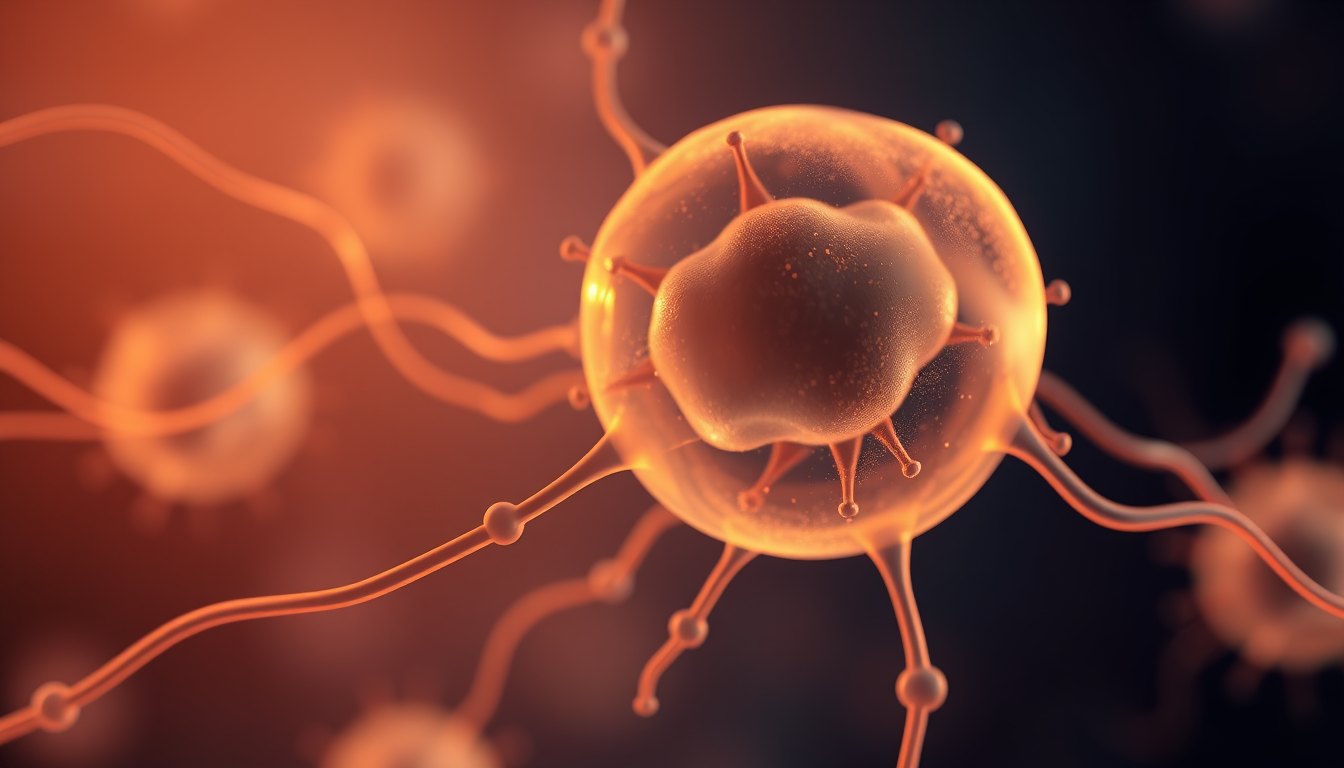
Calcitonin is a small peptide hormone secreted mainly by the parafollicular (C) cells of the thyroid gland. Published reviews describe it as a calcium-regulating hormone that acts on bone-resorbing cells through the calcitonin receptor, a class B G-protein-coupled receptor shared with amylin biology. In clinical literature it appears in two distinct roles: as a laboratory measurement used in thyroid nodule and medullary thyroid carcinoma work-up, and as a therapeutic agent discussed in bone and hypercalcaemia contexts. Reported adverse events include hypersensitivity reactions, with at least one documented anaphylaxis case.
Calcitonin is a small peptide hormone produced chiefly by the parafollicular cells — also called C cells — of the thyroid gland. It is one of the classical calcium-regulating hormones taught alongside parathyroid hormone and vitamin D, and it is one of the few endogenous peptides that appears in three separate research literatures at once: endocrine physiology, oncology (where it functions as a tumour marker), and receptor pharmacology, where the calcitonin receptor sits at the centre of amylin and calcitonin-gene-related-peptide research.
This page is for educational purposes only and is not medical advice; consult a licensed physician for any question about diagnosis, testing or treatment. Nothing here describes a protocol, and no dosing schedule is presented because the verified literature summarised below is reviewed for what researchers observed, not for instruction.
Where Calcitonin Is Produced
The principal source is the thyroid C cell, a neuroendocrine cell population distinct from the follicular cells that make thyroid hormone. Because C cells are neuroendocrine in character, the distinction between calcitonin-producing and non-producing thyroid neuroendocrine lesions has been documented in pathology reporting: a case report described a neuroendocrine tumour of the thyroid gland that did not produce calcitonin, illustrating that C-cell-lineage histology and calcitonin expression do not always travel together (PMID 26860935).
What It Does in the Body
The dominant physiological theme in the reviews is inhibition of bone resorption. A 2020 review characterised calcitonin as a hormone acting to restrain osteoclastic bone resorption and to lower circulating calcium, and framed its continuing relevance as a "useful old friend" in skeletal medicine (PMID 33265089). The same anti-resorptive logic extends beyond the skeleton: a Japanese review examined odontoclasts — the resorbing cells responsible for dental root resorption — and discussed calcitonin in relation to their activity, since odontoclasts share lineage and receptor features with osteoclasts (PMID 22201095).
In bone-disease literature, calcitonin is discussed as one of several agents historically used in osteoporosis management. A 2023 review in an orthopaedics journal considered the role of calcitonin alongside strontium ranelate in osteoporosis, placing both within the broader shift of prescribing patterns over recent decades (PMID 38107820).
Doing the math on a vial? The PeptideU app does reconstitution, units and dilution for you.
Try it freeThe Calcitonin Receptor and Why Peptide Researchers Meet the Term
Calcitonin signals through the calcitonin receptor, a class B G-protein-coupled receptor. When the calcitonin receptor pairs with receptor activity-modifying proteins, it forms amylin receptors — which is why calcitonin appears constantly in papers about amylin-family pharmacology rather than only in calcium papers. A 2024 peptide-chemistry study examined hybrid peptides built from calcitonin and amylin sequences and reported that these hybrids modulated activation of amylin and calcitonin receptors, an approach used to probe which sequence regions drive selectivity between the two receptor populations (PMID 39454962).
Receptor distribution is also studied outside bone. A 2022 preclinical study validated calcitonin receptor antibodies and mapped calcitonin receptor expression in the rodent brain, work carried out in the context of headache research where calcitonin-family receptors are of interest (PMID 35410497). The authors' emphasis on antibody validation reflects a recurring methodological problem: receptor maps depend entirely on whether the detection reagent is specific.
How Calcitonin Is Measured
Serum calcitonin is measured by immunoassay, and assay platform matters. A 2007 clinical-chemistry study compared measurement of calcitonin across immunoassay analysers and examined the analytical performance differences between them, a comparison that underlies why results from different laboratories are not freely interchangeable (PMID 17484631).
The most debated clinical application is screening in thyroid nodules. A 2017 study in a surgical journal asked whether routine calcitonin measurement in nodular thyroid disease management is worthwhile, evaluating the practice against its diagnostic yield (PMID 28382288). That question persists because calcitonin is a sensitive marker of C-cell disease but a positive result is not automatically specific.
When the marker fails
The marker has documented blind spots. A report in a surgical college journal described calcitonin-negative medullary thyroid carcinoma, characterising a "triple-negative" phenotype in which the expected biochemical signature was absent (PMID 31841033). This is the mirror image of the calcitonin-non-producing neuroendocrine thyroid tumour noted above (PMID 26860935).
Long-term follow-up
After surgery for medullary thyroid cancer, calcitonin is used as a follow-up measurement. A study of long-term calcitonin after thyroidectomy for medullary thyroid cancer in patients with multiple endocrine neoplasia type 2A examined how the marker behaved over extended follow-up in that hereditary setting (PMID 41498511).
| Context | How calcitonin appears in the literature | Example citation |
|---|---|---|
| Calcium and bone physiology | Anti-resorptive hormone acting on osteoclast-lineage cells | PMID 33265089 |
| Dental/root resorption research | Discussed in relation to odontoclast activity | PMID 22201095 |
| Receptor pharmacology | Calcitonin/amylin receptor selectivity probed with hybrid peptides | PMID 39454962 |
| Laboratory medicine | Immunoassay platform comparison | PMID 17484631 |
| Thyroid oncology | Screening, follow-up, and marker-negative phenotypes | PMID 28382288 |
Tracking research? Log entries with dates, lots and notes — records, never plans.
Get the appSafety and Tolerability of Calcitonin: What Studies Report
The clearest reported adverse-event signal in the verified literature is hypersensitivity. A case report in an allergy and immunopathology journal documented anaphylaxis to calcitonin, establishing that immediate-type allergic reactions to the peptide have been observed and reported in the clinical record (PMID 11022272).
Beyond individual reactions, the 2019 pharmacy-practice literature addressed institutional use patterns rather than pharmacology: researchers described calcitonin stewardship strategies, an approach applied to agents whose prescribing benefits from active oversight and review (PMID 29661063). The existence of a stewardship literature is itself informative — it indicates that appropriateness of use, not only tolerability, has been treated as a practical question. The 2023 osteoporosis review similarly situated calcitonin within a changing therapeutic landscape rather than presenting it as a first-line option (PMID 38107820).
What the Literature Does Not Settle
- Screening value. Whether routine calcitonin measurement in nodular thyroid disease is worthwhile was posed as an open question in the surgical literature rather than answered universally (PMID 28382288).
- Assay comparability. Platform-to-platform differences in calcitonin immunoassay performance were the explicit subject of analytical comparison (PMID 17484631).
- Receptor localisation. Brain calcitonin receptor mapping depended on antibody validation, which the study addressed directly (PMID 35410497).
- Marker-negative disease. Calcitonin-negative medullary thyroid carcinoma has been reported, limiting reliance on the marker alone (PMID 31841033).
Readers who encounter "calcitonin" in a peptide context are usually meeting one of two things: the endogenous calcium-regulating hormone described above, or the receptor family that calcitonin shares with amylin, which is where the hybrid-peptide work sits (PMID 39454962). Distinguishing the two prevents a common confusion between hormone physiology and receptor-targeted peptide chemistry.
Want the full course? Every compound, evidence-graded and cited, inside PeptideU.
Start learning freeReferences
- Calcitonin: A useful old friend (Journal of Musculoskeletal & Neuronal Interactions, 2020)
- Role of Calcitonin and Strontium Ranelate in Osteoporosis (Indian Journal of Orthopaedics, 2023)
- [Odontoclasts and calcitonin] (Clinical Calcium, 2012)
- Modulation of amylin and calcitonin receptor activation by hybrid peptides (Peptides, 2024)
- Calcitonin receptor antibody validation and expression in the rodent brain (Cephalalgia, 2022)
- Measurement of calcitonin by immunoassay analyzers (Clinical Chemistry and Laboratory Medicine, 2007)
- Routine calcitonin measurement in nodular thyroid disease management: is it worthwhile? (Annals of Surgical Treatment and Research, 2017)
- Calcitonin-negative medullary thyroid carcinoma: the 'triple-negative' phenotype (Annals of the Royal College of Surgeons of England, 2020)
- A Calcitonin Non-producing Neuroendocrine Tumor of the Thyroid Gland (Endocrine Pathology, 2016)
- Long-term calcitonin after thyroidectomy for medullary thyroid cancer in MEN2A (Endocrine-Related Cancer, 2026)
- Calcitonin Stewardship Strategies (Journal of Pharmacy Practice, 2019)
- Anaphylaxis to calcitonin (Allergologia et Immunopathologia, 2000)
Frequently asked questions
What is calcitonin and where is it produced?▾
Calcitonin is a small peptide hormone produced mainly by the parafollicular (C) cells of the thyroid gland. Because C cells are neuroendocrine, pathology literature distinguishes calcitonin-producing from non-producing thyroid neuroendocrine lesions; one case report described a thyroid neuroendocrine tumour that did not produce calcitonin (PMID 26860935). Its measurement in blood is performed by immunoassay (PMID 17484631).
What does calcitonin do in the body?▾
Reviews describe calcitonin as acting to restrain osteoclastic bone resorption and to lower circulating calcium, which is why a 2020 review framed it as a still-relevant hormone in skeletal medicine (PMID 33265089). The same anti-resorptive theme extends to dental research, where a review discussed calcitonin in relation to odontoclast activity and root resorption (PMID 22201095).
Is calcitonin a peptide, and how does it relate to amylin?▾
Yes. Calcitonin is a peptide hormone that signals through the calcitonin receptor, a class B G-protein-coupled receptor that also forms amylin receptors when paired with accessory proteins. A 2024 study built hybrid calcitonin–amylin peptides and reported that these hybrids modulated activation of amylin and calcitonin receptors, a method used to probe receptor selectivity (PMID 39454962).
What do studies report about adverse reactions to calcitonin?▾
The clearest reported signal in this literature is hypersensitivity: a case report documented anaphylaxis to calcitonin, showing that immediate-type allergic reactions have been observed and published (PMID 11022272). Separately, researchers described calcitonin stewardship strategies in a pharmacy-practice setting, indicating that appropriateness of prescribing has itself been treated as a practical concern (PMID 29661063).
Why is calcitonin measured in people with thyroid nodules?▾
Calcitonin is a sensitive marker of C-cell disease, so measuring it has been proposed as part of nodule evaluation. A 2017 study examined whether routine calcitonin measurement in nodular thyroid disease management is worthwhile, treating the question as unsettled rather than resolved (PMID 28382288). Results also depend on the assay platform used (PMID 17484631).
Can medullary thyroid carcinoma occur without raised calcitonin?▾
Yes. A report in a surgical college journal described calcitonin-negative medullary thyroid carcinoma and characterised a 'triple-negative' phenotype in which the expected biochemical signature was absent (PMID 31841033). This limits reliance on calcitonin alone. Long-term calcitonin behaviour after thyroidectomy has also been studied in hereditary MEN2A-associated disease (PMID 41498511).
Is calcitonin still discussed in osteoporosis literature?▾
It appears, but in context rather than as a leading option. A 2023 orthopaedics review considered the role of calcitonin alongside strontium ranelate in osteoporosis, situating both within changing prescribing patterns (PMID 38107820). A 2020 review similarly revisited calcitonin's continuing place in skeletal medicine (PMID 33265089). This page is educational only and is not medical advice.
Track it. Calculate it. Actually understand it.
References
This page summarises published research for education — it is not medical advice, and nothing here is a recommendation to use, purchase, or dose any substance. Study parameters described are what researchers reported, not instructions. Consult a qualified clinician before any health decision.