
Ghrelin: A Literature Course on What the Studies Report
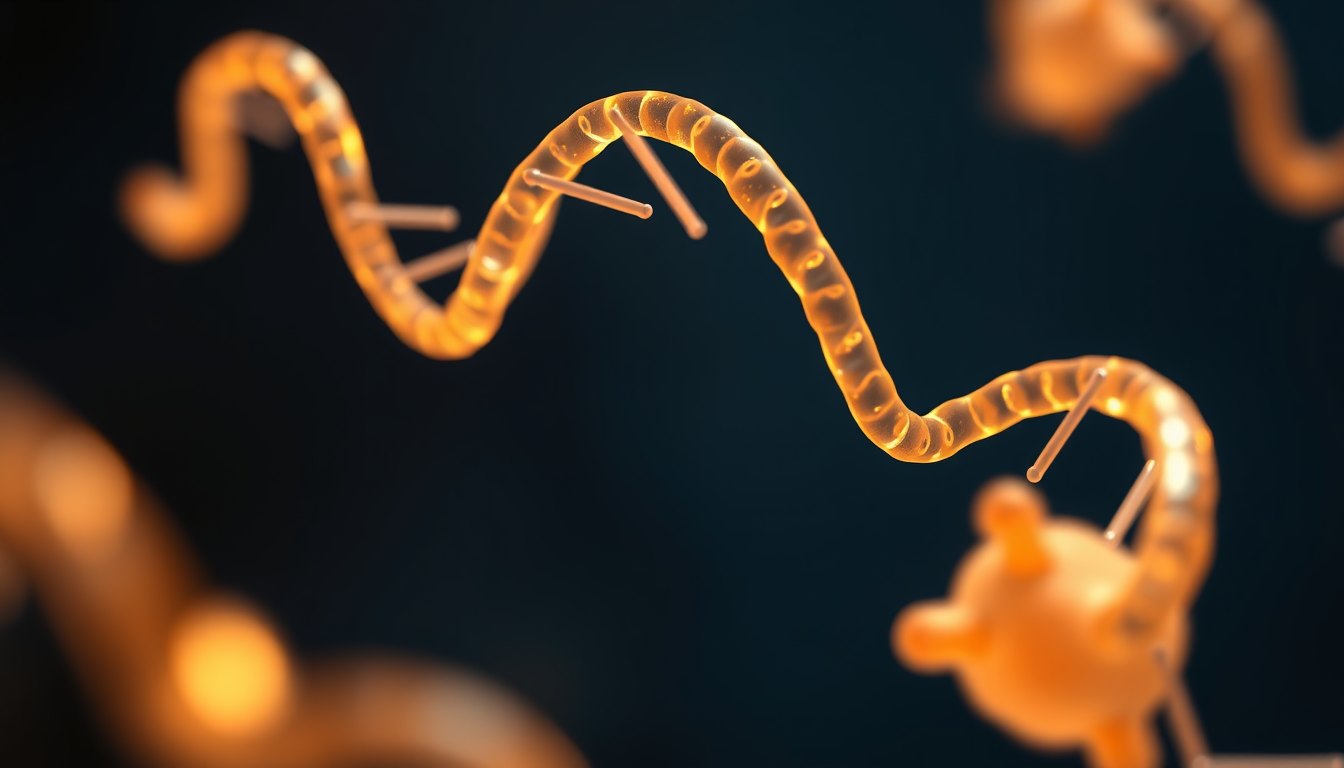
Ghrelin is a stomach-derived peptide hormone of 28 amino acids that becomes biologically active when an acyl group is attached, allowing it to bind the growth hormone secretagogue receptor. Published work describes roles in growth hormone release, appetite signalling and energy balance. This six-module course walks through how ghrelin has been defined and studied, the mechanisms reviews describe, outcomes reported in specific animal, cell and human studies, what the literature says about adverse effects, the limited pharmacokinetic data, and regulatory status.
Ghrelin is one of the most-studied gut-derived peptide hormones, and the published literature on it spans biochemistry, rodent behaviour, cardiovascular physiology, obesity research and surgical outcomes. This course summarises what a set of peer-reviewed papers reported, module by module, and flags where the evidence stops. It does not recommend, describe or imply any personal use. This page is for educational purposes only and is not medical advice; consult a licensed physician for any question about health, medication or a medical condition.
Each module below ends with a short note on the limits of the evidence, because the single most consistent feature of the ghrelin literature is that mechanistic and observational work is far more developed than controlled human interventional work.
Module 1: What Ghrelin Is and How It Has Been Studied
Definition and class
Ghrelin is described in the biochemistry literature as a peptide hormone of 28 amino acids that acts as an endogenous ligand for the growth hormone secretagogue receptor and stimulates growth hormone release, with additional described roles in appetite and energy balance (PMID 31613472). Classified by origin, it is a gastrointestinal peptide hormone; classified by receptor pharmacology, it is the natural agonist at GHS-R1a. In reviews it is often grouped with orexigenic signals, and one Cell Metabolism review reframed it as a hormone defending the organism against negative energy balance rather than a simple hunger switch (PMID 29576534).
Origin and cellular source
The biochemistry review located the dominant source of circulating ghrelin in endocrine cells of the gastric oxyntic mucosa, with smaller contributions described elsewhere in the gut and other tissues (PMID 31613472). A 2022 study examined gastric X/A-like cells directly and reported that DOCK4 regulates ghrelin production in those cells, identifying an intracellular regulator of hormone output rather than of hormone action (PMID 35302184). Cell-line work has also used ghrelin-expressing human gastric carcinoma cells as a platform for studying ghrelin synthesis (PMID 28003581).
Forms of the molecule
Ghrelin circulates in more than one form. Acylation of the peptide is what permits receptor binding, and the biochemistry review described the acyl modification as essential for activity at the growth hormone secretagogue receptor, with des-acyl ghrelin treated as a separate circulating species (PMID 31613472). A 2024 study in Frontiers in Endocrinology characterised acyl modifications in bovine, porcine and equine ghrelins, showing that the acyl group is not identical across mammalian species (PMID 38828411). Human studies that measure "active ghrelin" are measuring the acylated fraction, as in a postpartum cohort study that assayed active ghrelin in women after childbirth (PMID 26424410).
Limits of the evidence in Module 1
Definitions in this module come mainly from review and biochemistry sources rather than from primary structural work reproduced here, and the species-comparison study addressed livestock ghrelins rather than human samples (PMID 38828411). Assay methods for acylated versus total ghrelin differ between papers, which complicates direct comparison of absolute concentrations across the studies cited on this page.
Module 2: Mechanism as Described in the Literature
Receptor signalling and central actions
The mechanistic account in the biochemistry literature runs from acylated ghrelin binding GHS-R1a to stimulation of growth hormone secretion, with appetite and metabolic effects described alongside the endocrine action (PMID 31613472). The Cell Metabolism review argued that ghrelin's signalling is best understood as a homeostatic force engaged during caloric deficit, coordinating feeding, glucose handling and defence of body mass (PMID 29576534).
Regulation of ghrelin release
A 2021 mouse study in JCI Insight examined insulin receptors expressed on ghrelin cells and reported that these receptors mediate the declines in plasma ghrelin that follow a meal and that accompany obesity (PMID 34473648). That work placed insulin signalling upstream of ghrelin secretion, which is a different mechanism from ghrelin acting on its own receptor. On the synthesis side, the DOCK4 study identified an intracellular pathway controlling ghrelin production in X/A-like cells (PMID 35302184), and a cell study reported that triterpenes suppressed octanoylated ghrelin production in ghrelin-expressing human gastric carcinoma cells (PMID 28003581).
Peripheral tissues
Mechanistic descriptions extend beyond the hypothalamus and pituitary. A cardiology review summarised receptor expression and described actions of ghrelin relevant to the cardiovascular system, including effects discussed in the setting of cardiac function and vascular tone (PMID 21286280). In skeletal muscle, a 2007 cellular physiology study reported that ghrelin stimulated myocyte development in vitro, which the authors framed as a direct peripheral action rather than a growth-hormone-mediated one (PMID 17762192).
Limits of the evidence in Module 2
Mechanism in this module rests on reviews, one rodent genetic model and two cell-culture systems. Cell-culture findings such as the myocyte result (PMID 17762192) describe what cells did under defined culture conditions and do not establish what happens in an intact human. The insulin-receptor study used mice, so its conclusions about meal- and obesity-induced ghrelin declines are model-specific (PMID 34473648).
Doing the math on a vial? The PeptideU app does reconstitution, units and dilution for you.
Try it freeModule 3: Reported Outcomes, Study by Study
The table below groups the verified papers by model and endpoint. No benefit is claimed or implied; the right-hand column states only what each paper reported.
| Study | Model | Primary endpoint area | What was reported |
|---|---|---|---|
| PMID 17762192 | Cell culture (myocytes) | Muscle cell development | Ghrelin stimulated myocyte development in vitro (PMID 17762192) |
| PMID 28938610 | Estrogen-deficient mice | Depression-like behaviour | Researchers reported an antidepressant-like effect of ghrelin in estrogen-deficient mice (PMID 28938610) |
| PMID 34473648 | Mice | Plasma ghrelin regulation | Ghrelin-cell insulin receptors mediated meal- and obesity-induced declines in plasma ghrelin (PMID 34473648) |
| PMID 35302184 | Gastric X/A-like cells | Ghrelin production | DOCK4 regulated ghrelin production in these cells (PMID 35302184) |
| PMID 28003581 | Human gastric carcinoma cell line | Octanoylated ghrelin output | Triterpenes suppressed octanoylated ghrelin production (PMID 28003581) |
| PMID 26424410 | Postpartum women | Active ghrelin concentrations | The study measured active ghrelin in the postpartum period and examined its relationship to maternal mental health measures (PMID 26424410) |
| PMID 38634584 | Bariatric surgery patients | Serum ghrelin | The study examined serum ghrelin changes after bariatric surgery (PMID 38634584) |
Animal behavioural work
The clearest interventional finding among the verified papers came from rodents: a 2017 study reported that ghrelin produced an antidepressant-like effect in estrogen-deficient mice, using behavioural readouts in an ovariectomy-based model (PMID 28938610). Behavioural rodent endpoints are screening tools, and the paper did not extend to human depression outcomes.
Human observational work
Human data in this collection are observational rather than interventional. Researchers measured active ghrelin in the postpartum period and related it to maternal mental-health variables (PMID 26424410), while a 2024 surgical paper followed serum ghrelin after bariatric surgery (PMID 38634584). Both designs describe ghrelin as a measured variable that moves with physiological state; neither administered ghrelin.
Reviews on obesity and cardiovascular disease
A 2005 review examined ghrelin in the context of obesity (PMID 15771315), and a 2010 review examined ghrelin in cardiovascular disease (PMID 21286280). Reviews synthesise prior work and inherit the limitations of the studies they summarise; they are not themselves new evidence of effect.
Limits of the evidence in Module 3
Across these papers there is no randomised controlled trial of ghrelin administration in humans, no dose-ranging study and no long-term outcome study. Endpoints differ so widely — cell differentiation, mouse behaviour, plasma hormone concentrations, post-surgical hormone trajectories — that they cannot be pooled. The strongest statement the collection supports is that ghrelin is a physiologically active hormone whose concentrations track energy state and whose administration changes measured outcomes in specific non-human models (PMID 28938610, PMID 17762192).
Module 4: Ghrelin Side Effects: What Studies Report
None of the verified papers was designed as a safety study, and none of them presented a systematic adverse-event table. That absence is itself the most important finding for this module, and it is stated here rather than filled in with speculation.
What the literature does describe are physiological consequences of ghrelin signalling that safety-oriented research would be expected to monitor. Reviews of energy homeostasis describe ghrelin as a signal engaged in negative energy balance, with actions on feeding and metabolic regulation (PMID 29576534), and the obesity review considered ghrelin specifically in relation to body-weight regulation (PMID 15771315). Because growth hormone release is a described action of the peptide (PMID 31613472), endocrine endpoints are an obvious monitoring target in any future safety work.
In the cardiovascular literature, a review discussed ghrelin's relevance to cardiovascular disease and described actions on the heart and vasculature (PMID 21286280), which identifies cardiovascular measures as another plausible monitoring domain. Separately, work in ghrelin-expressing human gastric carcinoma cells shows that some tumour cell lines synthesise octanoylated ghrelin and that this production can be pharmacologically suppressed in vitro (PMID 28003581); this is a tumour-biology observation in cell culture and was not reported as a clinical safety signal.
Limits of the evidence in Module 4
There are no published incidence rates, no severity gradings and no discontinuation data in the sources reviewed here. Physiological actions described in reviews are not the same as documented adverse events, and nothing in this module should be read as a safety profile. Readers looking for adverse-event data on ghrelin receptor agonists in humans would need trial reports outside this verified set.
Tracking research? Log entries with dates, lots and notes — records, never plans.
Get the appModule 5: Pharmacokinetics Where Data Exist
Formal pharmacokinetic parameters are largely absent from the verified papers, so this module describes the kinetic biology they do cover.
- Activation state. The biochemistry review described acylation as the modification required for activity at the growth hormone secretagogue receptor, with des-acyl ghrelin circulating as a distinct species (PMID 31613472). Any kinetic statement about ghrelin therefore depends on which form an assay measures.
- Acyl group chemistry across species. A 2024 study characterised acyl modifications in bovine, porcine and equine ghrelins, documenting that the acyl group attached to the peptide differs between species (PMID 38828411).
- Meal-related dynamics. A mouse study reported that plasma ghrelin fell after meals and in obesity, and that ghrelin-cell insulin receptors mediated those declines (PMID 34473648). This describes secretory dynamics, not clearance.
- State-dependent concentrations in humans. Human studies measured active ghrelin in the postpartum period (PMID 26424410) and serum ghrelin after bariatric surgery (PMID 38634584), illustrating that circulating concentrations shift with physiological and surgical context.
Limits of the evidence in Module 5
The verified sources did not report half-life, clearance, volume of distribution, bioavailability by any route, or dose-concentration relationships for administered ghrelin. Because no dosing data appear in these papers, none is presented anywhere on this page. Comparisons between studies are further limited by differences between total and acylated ghrelin assays.
Module 6: Regulatory Status
Ghrelin itself is an endogenous human hormone, and the verified literature treats it as a research analyte and experimental tool rather than as a marketed medicine. In the United States, there is no ghrelin product approved by the FDA as a drug for administration to patients; peptide material sold to laboratories is typically labelled research use only, meaning it is not intended for diagnostic or therapeutic use in humans or animals. Research-use-only labelling is a distribution status, not an efficacy or safety judgement.
Pharmacy compounding in the United States operates under sections 503A and 503B of the Federal Food, Drug, and Cosmetic Act. Under that framework, a bulk drug substance generally must be the subject of an applicable USP or NF monograph, be a component of an FDA-approved drug, or appear on the relevant FDA bulk drug substances list before it may be compounded; substances that meet none of those conditions fall outside the compounding pathway. Regulators in other jurisdictions maintain separate approval and importation rules, and anti-doping bodies regulate growth hormone secretagogue activity independently of medicines regulators.
Research that uses ghrelin — whether in gastric cell lines (PMID 28003581), rodent models (PMID 28938610) or human cohorts (PMID 38634584) — proceeds under institutional review and animal-care oversight rather than under drug marketing authorisation.
Limits of the evidence in Module 6
Regulatory status changes over time and by country, and the descriptions above are general statements of framework, not a determination about any specific product. This section is informational and is not legal advice; questions about the status of a substance in a particular jurisdiction belong with a qualified professional.
Want the full course? Every compound, evidence-graded and cited, inside PeptideU.
Start learning freeWhat the Studies Did Not Test
Reading the verified literature end to end, several gaps stand out:
- No human dosing. No verified paper administered ghrelin to humans, so no human dose, schedule or duration exists in this evidence base.
- No long-term outcomes. The rodent behavioural study examined an antidepressant-like endpoint in estrogen-deficient mice (PMID 28938610) and did not follow long-term health outcomes.
- No body-composition trial. The myocyte finding was a cell-culture result (PMID 17762192); no study here measured lean mass or strength in living subjects.
- No safety endpoints. No verified paper collected adverse events, laboratory safety panels or cardiovascular safety measures, even where reviews discussed cardiovascular actions (PMID 21286280).
- No pharmacokinetic profiling. Secretory dynamics were characterised in mice (PMID 34473648), but no exposure-response analysis of administered ghrelin appears in these sources.
- No comparison with receptor agonists. The collection does not compare native ghrelin with synthetic growth hormone secretagogues.
Taken together, the papers describe a well-characterised hormone with clear physiological roles in growth hormone release, appetite signalling and energy homeostasis (PMID 31613472, PMID 29576534), alongside an interventional evidence base that remains preclinical. Again: this page is educational only and is not medical advice.
References
- Biochemistry, Ghrelin (StatPearls, 2026)
- Ghrelin stimulates myocyte development (Cellular Physiology and Biochemistry, 2007)
- Active ghrelin and the postpartum (Archives of Women's Mental Health, 2016)
- [Ghrelin and obesity] (Revue Medicale de Liege, 2005)
- [Serum ghrelin changes after bariatric surgery] (Khirurgiia, 2024)
- Ghrelin cell-expressed insulin receptors mediate meal- and obesity-induced declines in plasma ghrelin (JCI Insight, 2021)
- Ghrelin and cardiovascular diseases (Current Cardiology Reviews, 2010)
- Triterpenes suppress octanoylated ghrelin production in ghrelin-expressing human gastric carcinoma cells (Biomedical Research, 2016)
- The Homeostatic Force of Ghrelin (Cell Metabolism, 2018)
- DOCK4 regulates ghrelin production in gastric X/A-like cells (Journal of Endocrinological Investigation, 2022)
- Ghrelin produces antidepressant-like effect in the estrogen deficient mice (Oncotarget, 2017)
- Acyl modifications in bovine, porcine, and equine ghrelins (Frontiers in Endocrinology, 2024)
Frequently asked questions
What is ghrelin?▾
Ghrelin is described in the biochemistry literature as a 28-amino-acid peptide hormone produced mainly by endocrine cells of the gastric mucosa, acting as the endogenous ligand at the growth hormone secretagogue receptor and stimulating growth hormone release (PMID 31613472). A Cell Metabolism review characterised it as a homeostatic signal engaged during negative energy balance rather than a simple hunger hormone (PMID 29576534).
Why do papers distinguish acyl ghrelin from des-acyl ghrelin?▾
Because acylation determines receptor activity. The biochemistry review described the acyl modification as required for action at the growth hormone secretagogue receptor, with des-acyl ghrelin circulating as a separate species (PMID 31613472). A 2024 study characterised acyl modifications in bovine, porcine and equine ghrelins, showing the attached acyl group is not identical across mammalian species (PMID 38828411).
What outcomes have studies reported for ghrelin?▾
Reported outcomes are model-specific. A 2007 cell study reported that ghrelin stimulated myocyte development in vitro (PMID 17762192), and a 2017 study reported an antidepressant-like effect in estrogen-deficient mice (PMID 28938610). Human papers measured ghrelin as a variable rather than administering it, including serum ghrelin after bariatric surgery (PMID 38634584). No benefit in humans is established by these papers.
What do studies report about ghrelin side effects?▾
None of the verified papers was a safety study, and none published adverse-event tables. Reviews describe physiological actions that safety research would monitor, including effects on feeding and energy homeostasis (PMID 29576534) and actions relevant to cardiovascular disease (PMID 21286280). Growth hormone release is also a described action (PMID 31613472). No incidence rates or severity data appear in these sources.
Are there pharmacokinetic data for ghrelin?▾
Formal parameters are largely missing. The verified sources did not report half-life, clearance or bioavailability. What they describe is secretory biology: a mouse study reported that ghrelin-cell insulin receptors mediated meal- and obesity-induced declines in plasma ghrelin (PMID 34473648), and human work showed concentrations shifting with physiological state, such as the postpartum period (PMID 26424410).
What controls how much ghrelin the stomach makes?▾
Research has examined regulators of production directly. A 2022 study reported that DOCK4 regulates ghrelin production in gastric X/A-like cells (PMID 35302184), and a cell-line study reported that triterpenes suppressed octanoylated ghrelin production in ghrelin-expressing human gastric carcinoma cells (PMID 28003581). Upstream, insulin receptors on ghrelin cells were reported to mediate post-meal declines in plasma ghrelin (PMID 34473648).
What is the regulatory status of ghrelin?▾
Ghrelin is an endogenous hormone studied as a research analyte; there is no FDA-approved ghrelin drug product in the United States, and laboratory peptide material is typically labelled research use only. Compounding under sections 503A and 503B generally requires a USP monograph, inclusion in an approved drug, or listing on the applicable FDA bulk substances list. This is informational, not legal advice.
Track it. Calculate it. Actually understand it.
References
This page summarises published research for education — it is not medical advice, and nothing here is a recommendation to use, purchase, or dose any substance. Study parameters described are what researchers reported, not instructions. Consult a qualified clinician before any health decision.