
How Is a Polypeptide Formed? Translation and the Ribosome
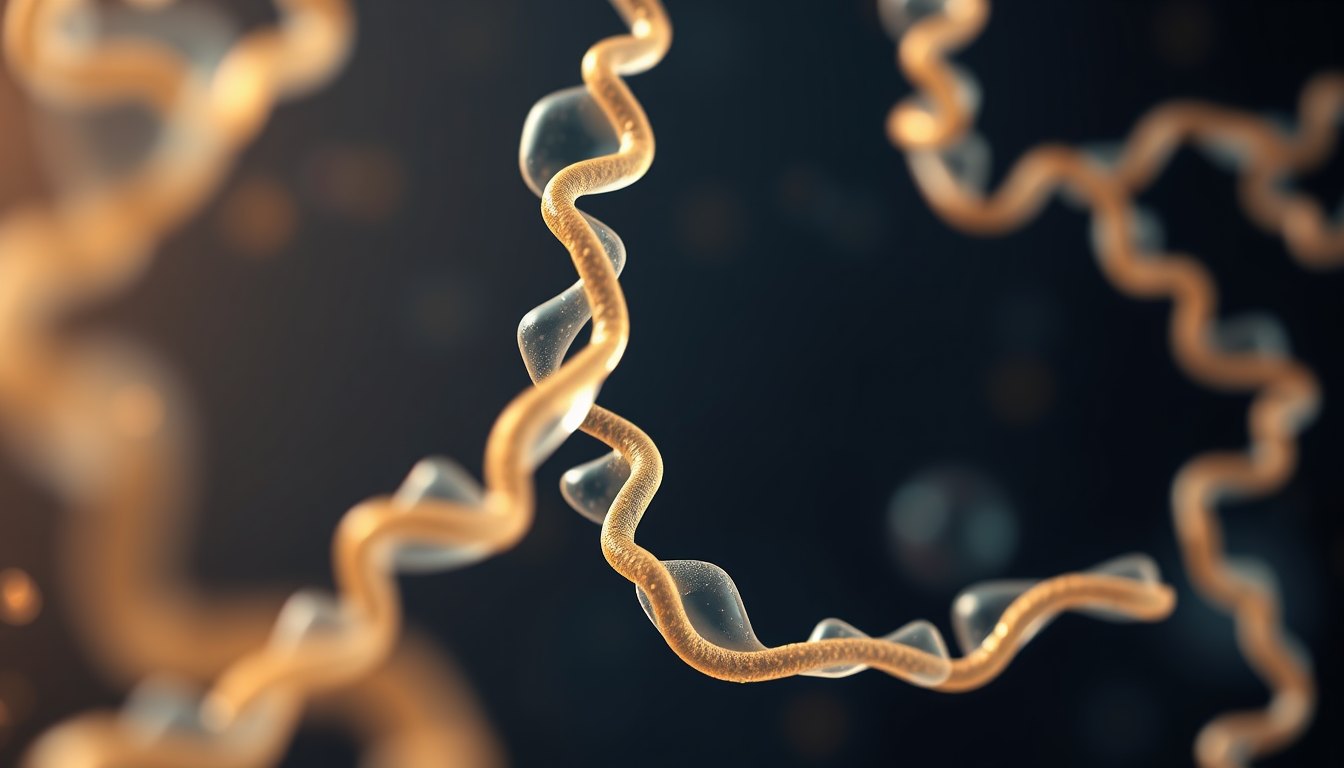
A polypeptide is formed during translation, when a ribosome reads messenger RNA three nucleotides at a time and links the matching amino acids into a growing chain. Transfer RNAs deliver the amino acids, and protein factors drive initiation, elongation and termination. In cells, this happens on ribosomes in the cytoplasm and on ribosomes docked at the endoplasmic reticulum membrane. Published reviews also describe folding that begins while the chain is still attached, plus quality control systems that handle stalled or faulty translation.
The short answer
A polypeptide is a chain of amino acids joined end to end. In living cells, that chain is built by translation: a ribosome moves along a messenger RNA (mRNA) molecule, reads it three nucleotides at a time, and adds the amino acid that matches each three letter codon. Reviews of bacterial translation described the same three stage architecture that textbooks use, namely initiation, elongation and termination, each driven by dedicated protein factors and by the ribosome itself (PMID 29661790).
The chemistry of the linkage that holds two amino acids together is covered separately in the peptide bond glossary entry and is not repeated here. Chemical assembly of peptides outside a cell, in a laboratory, is a different process and is described on the peptide synthesis page.
This page is for educational purposes only and is not medical advice; consult a licensed physician about any personal health question. Nothing here describes how any substance should be used.
The three molecules that do the work
Messenger RNA: the instructions
mRNA carries a copy of a gene's coding sequence. Its nucleotides are read in non overlapping groups of three. Not every codon is read at the same speed: a review of codon usage reported that optimal and non optimal codons differ in how efficiently their transfer RNAs are supplied, which influences elongation rate and messenger RNA stability, and that review examined how those differences relate to cancer biology (PMID 34584217).
Transfer RNA: the adaptors
Transfer RNA (tRNA) molecules are charged with a specific amino acid at one end and carry an anticodon that pairs with the matching mRNA codon at the other. Fidelity is not limited to codon matching. A review of chiral checkpoints reported that several steps of protein biosynthesis, including editing by aminoacyl tRNA synthetases and the activity of D aminoacyl tRNA deacylase, act to keep D amino acids out of the growing chain so that the product remains built from L amino acids (PMID 31591268).
The ribosome: the machine
The ribosome is a large complex of ribosomal RNA and proteins with two subunits that close around the mRNA. It contains binding sites for incoming and outgoing tRNAs and the catalytic centre that forms the bond between amino acids. Reviews of bacterial translation described assembly of the small and large subunits on the mRNA as the committed step that starts protein synthesis (PMID 29661790). Structural reviews added that the newly made chain leaves through an exit tunnel in the large subunit, and that the tunnel environment itself shapes early folding events (PMID 38071940).
Where polypeptide synthesis occurs
Translation takes place wherever ribosomes are. In bacteria, which have no nucleus, reviews reported that translation proceeds in the cytoplasm on messenger RNAs that are still being made or have just been made, with initiation guided by sequence features upstream of the start codon (PMID 29661790).
In eukaryotic cells, many polypeptides are made on free cytoplasmic ribosomes, while proteins destined for secretion or for membranes are made on ribosomes that dock at the endoplasmic reticulum. A review of the Sec61 translocon described how the nascent chain is threaded across or into the endoplasmic reticulum membrane through a protein conducting channel, a process that can occur cotranslationally while the ribosome is still elongating the chain (PMID 35940906).
Doing the math on a vial? The PeptideU app does reconstitution, units and dilution for you.
Try it freeStage one: initiation
Initiation positions the ribosome so that the correct start codon sits in the right place. In bacteria, reviews reported that initiation factors help the small subunit engage the messenger RNA and load an initiator formylmethionine tRNA at the start codon before the large subunit joins to form the complete, elongation competent ribosome (PMID 29661790). Setting the reading frame correctly at this step matters, because every subsequent codon is read relative to that frame.
Stage two: elongation
Elongation is the repeating cycle that lengthens the chain by one amino acid at a time. A review of translation elongation factors described the core cycle in both bacteria and eukaryotes: a GTP binding factor, EF-Tu in bacteria and eEF1A in eukaryotes, delivers the aminoacyl tRNA to the ribosome, and a second factor, EF-G in bacteria and eEF2 in eukaryotes, drives translocation of the ribosome to the next codon, with these factors also serving as regulatory targets (PMID 35127825).
The cycle has three recurring events:
- Selection. A charged tRNA whose anticodon matches the codon is accepted into the ribosome, a step reported to be controlled by elongation factor mediated proofreading (PMID 35127825).
- Bond formation. The ribosome catalyses joining of the incoming amino acid to the existing chain; the bond chemistry is described in the peptide bond entry.
- Translocation. The ribosome shifts by exactly three nucleotides so the next codon is ready to be read, a step attributed to EF-G and eEF2 in reviews of elongation factors (PMID 35127825).
Elongation speed is not uniform along a transcript. The codon optimality review reported that codon composition influences the pace of elongation and the stability of the messenger RNA itself (PMID 34584217).
Tracking research? Log entries with dates, lots and notes: records, never plans.
Get the appStage three: termination and recycling
Elongation stops when a stop codon enters the decoding site. Reviews of bacterial translation reported that release factors recognise stop codons and trigger hydrolysis of the bond holding the finished chain to the final tRNA, after which the ribosomal subunits are separated and recycled for another round of translation (PMID 29661790).
The chain starts folding before it is finished
A polypeptide does not wait until termination to adopt structure. Reviews of cotranslational folding reported that folding begins vectorially as the chain emerges from the exit tunnel, so the amino terminal portion can sample structure while the carboxy terminal portion is still being synthesised (PMID 31936054). A review focused on multi domain proteins reported that sequential emergence of domains can help individual domains fold one at a time and reduce unproductive interactions between them (PMID 35517860). Structural work summarised in a 2024 review reported that the ribosome and its exit tunnel actively shape these early folding intermediates rather than acting as a passive conduit (PMID 38071940).
Chemical maturation also starts early. A review of cotranslational maturation in bacteria described enzymes and chaperones that act on the emerging chain, including removal of the formyl group and the initiator methionine and engagement by ribosome associated chaperones (PMID 34113653).
Want the full course? Every compound, evidence-graded and cited, inside PeptideU.
Start learning freeStalling, errors and quality control: what studies report
Translation is not error free, and cells maintain surveillance systems. A review of ribosome associated quality control reported that collided ribosomes serve as a signal that recruits factors which split the stalled ribosome, mark the incomplete nascent chain for degradation, and act across organisms from bacteria to humans (PMID 35452614). A separate review of quality controls induced by aberrant translation reported that defective messenger RNAs, including those lacking a stop codon or causing ribosomes to stall, are recognised by dedicated decay pathways that remove both the faulty transcript and the aberrant product (PMID 31950154).
Bacteria add rescue systems of their own. A review of bacterial ribosome rescue reported that transfer messenger RNA based tagging and alternative rescue factors free ribosomes stuck on problematic messages and route the incomplete polypeptide to degradation (PMID 33815344). Stereochemical fidelity is policed as well, with a review reporting multiple checkpoints that limit incorporation of D amino acids during biosynthesis (PMID 31591268).
Stage summary table
| Stage | What happens | Representative cited review |
|---|---|---|
| Initiation | Small subunit engages mRNA, initiator tRNA loads at the start codon, large subunit joins | PMID 29661790 |
| Elongation | Aminoacyl tRNA delivery, bond formation, three nucleotide translocation, repeated per codon | PMID 35127825 |
| Termination | Release factors read the stop codon, the chain is released, subunits are recycled | PMID 29661790 |
| Cotranslational folding | Structure forms as the chain leaves the exit tunnel | PMID 31936054 |
| Membrane targeting | Nascent chains thread through the Sec61 channel at the endoplasmic reticulum | PMID 35940906 |
| Quality control | Collided or stalled ribosomes are split and incomplete chains are degraded | PMID 35452614 |
How cellular translation differs from chemical assembly
Cellular translation is template driven, directional from the amino terminus to the carboxy terminus, and coupled to folding, maturation and surveillance, as the reviews above reported (PMID 34113653, PMID 35452614). Laboratory assembly of peptides uses a different logic and different constraints and is described on the peptide synthesis page.
Readers comparing the two should treat this page as background biology. It describes what published reviews report about how cells build polypeptide chains, and it offers no guidance about any compound or health decision.
References
- Translation in Prokaryotes (Cold Spring Harbor Perspectives in Biology, 2018)
- Functions and Regulation of Translation Elongation Factors (Frontiers in Molecular Biosciences, 2021)
- Codon optimality in cancer (Oncogene, 2021)
- Mechanism of Protein Translocation by the Sec61 Translocon Complex (Cold Spring Harbor Perspectives in Biology, 2023)
- How the ribosome shapes cotranslational protein folding (Current Opinion in Structural Biology, 2024)
- Cotranslational Folding of Proteins on the Ribosome (Biomolecules, 2020)
- Co-Translational Folding of Multi-Domain Proteins (Frontiers in Molecular Biosciences, 2022)
- Mechanisms of Cotranslational Protein Maturation in Bacteria (Frontiers in Molecular Biosciences, 2021)
- Ribosome-associated quality-control mechanisms from bacteria to humans (Molecular Cell, 2022)
- Quality controls induced by aberrant translation (Nucleic Acids Research, 2020)
- Ribosome Rescue Pathways in Bacteria (Frontiers in Microbiology, 2021)
- Chiral checkpoints during protein biosynthesis (Journal of Biological Chemistry, 2019)
Frequently asked questions
Where does polypeptide synthesis occur in the cell?▾
On ribosomes. Reviews of bacterial translation reported that synthesis proceeds in the cytoplasm (PMID 29661790). In eukaryotic cells, many chains are made on free cytoplasmic ribosomes, while secretory and membrane proteins are made at the endoplasmic reticulum, where a review reported that the nascent chain passes through the Sec61 translocon during synthesis (PMID 35940906).
What is the role of transfer RNA?▾
Transfer RNA acts as an adaptor, pairing its anticodon with an mRNA codon while carrying the matching amino acid. A review of elongation factors reported that EF-Tu in bacteria and eEF1A in eukaryotes deliver charged tRNAs to the ribosome (PMID 35127825). A separate review reported editing systems that keep D amino acids out of the chain (PMID 31591268).
How does the ribosome know where to stop?▾
Stop codons do not pair with a transfer RNA. Reviews of prokaryotic translation reported that release factors recognise stop codons and trigger release of the finished polypeptide, after which the subunits are recycled for another round of synthesis (PMID 29661790). Failure of this step is handled by rescue systems described in bacteria (PMID 33815344).
Does a polypeptide fold only after translation finishes?▾
No. Reviews reported that folding begins as the chain emerges from the ribosomal exit tunnel, so early regions can acquire structure before synthesis ends (PMID 31936054). A review of multi domain proteins reported that sequential domain emergence can support stepwise folding (PMID 35517860), and structural work reported that the ribosome itself shapes these intermediates (PMID 38071940).
Why do some messenger RNAs translate faster than others?▾
Codon composition is one factor. A review of codon optimality reported that optimal and non optimal codons differ in transfer RNA availability, which affects the speed of elongation and the stability of the transcript, and the review examined how these differences relate to cancer biology (PMID 34584217). Elongation factor regulation also contributes (PMID 35127825).
What happens if a ribosome stalls on a message?▾
Surveillance systems respond. A review reported that collided ribosomes trigger quality control factors that split the stalled complex and target the incomplete chain for degradation across bacteria and humans (PMID 35452614). Another review reported decay pathways that remove faulty transcripts, including those lacking a stop codon (PMID 31950154), with bacterial rescue factors described separately (PMID 33815344).
Is cellular translation the same as laboratory peptide synthesis?▾
No. Translation is template directed and coupled to folding, maturation and quality control, as reviews reported for bacterial maturation enzymes and chaperones (PMID 34113653) and for ribosome associated quality control (PMID 35452614). Chemical assembly outside cells follows different principles and is described on the PeptideU peptide synthesis page. This information is educational only.
Track it. Calculate it. Actually understand it.
References
This page summarises published research for education. It is not medical advice, and nothing here is a recommendation to use, purchase, or dose any substance. Study parameters described are what researchers reported, not instructions. Consult a qualified clinician before any health decision.