
How Does Nerve Growth Factor Work? Mechanism and What Studies Report
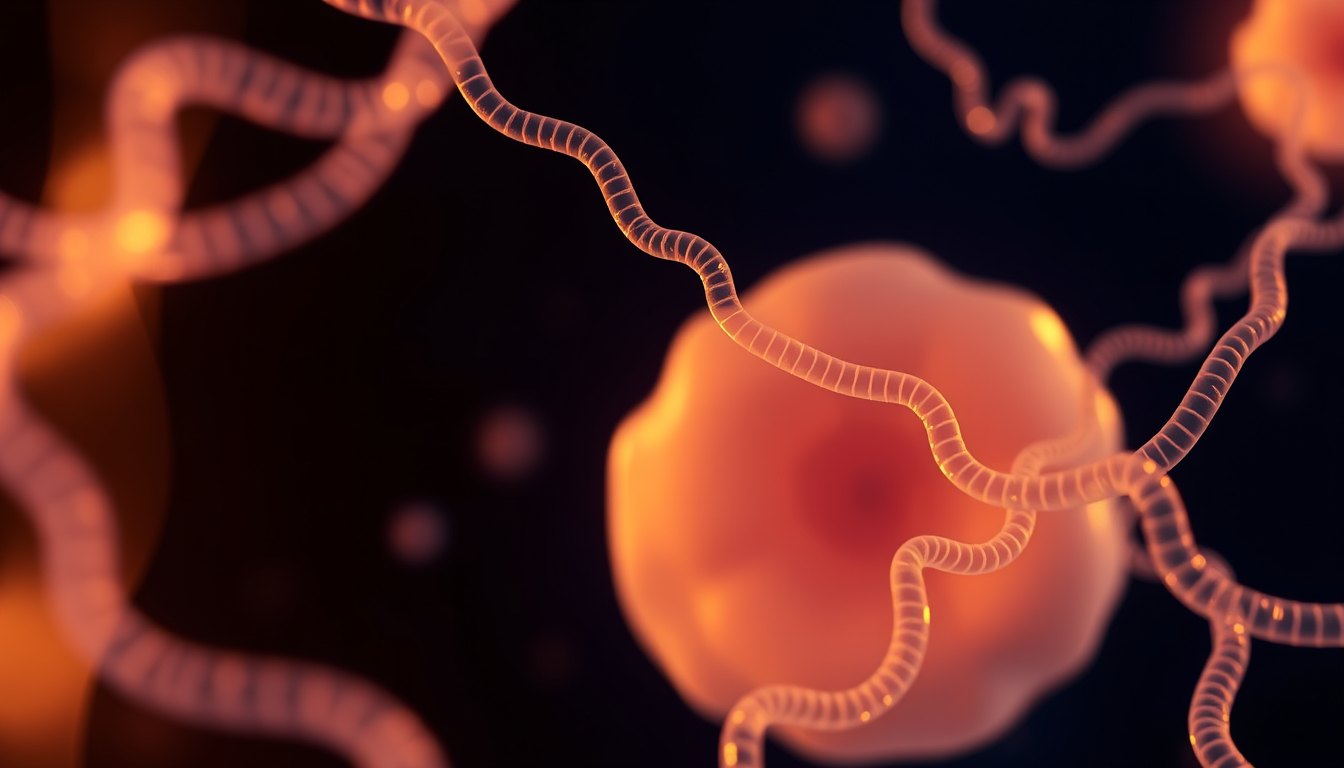
Nerve growth factor (NGF) is a secreted protein that nerve cells and other tissues use as a chemical message. It binds two surface receptors, the tyrosine kinase TrkA and the p75 neurotrophin receptor, which switch on kinase cascades and travel back to the cell body inside signaling endosomes. Published work links this pathway to sensory neuron survival, pain sensitisation, joint repair, immune regulation and tumour biology. This page summarises the published biology only and gives no treatment guidance.
The short answer, in plain language
Nerve growth factor, usually written NGF, is a small secreted protein that tissues release and that certain nerve cells listen for. It is not a nutrient and not an energy source. It works like a message: cells that carry the right receptor on their surface detect NGF, change their internal chemistry, and alter how they grow, how long they survive, and how strongly they report sensation back to the spinal cord and brain.
Two receptor proteins do the listening. One is TrkA, an enzyme-linked receptor that adds phosphate groups to other proteins once NGF binds it, a process described in a review of Trk receptor signal transduction (PMID 12676795). The other is p75NTR, also called NGFR, which can partner with TrkA or act through separate routes and which researchers have examined closely in the context of Alzheimer disease biology (PMID 36834612). Because an NGF molecule often reaches a nerve ending far away from the nerve cell body, the activated receptor is packaged into an internal vesicle and carried backwards along the axon, a mechanism reviewed under the heading of NGF signaling in endosomes (PMID 34453290).
For background definitions, see the nerve growth factor physiology hub, the NGF glossary entry, and the peptide hormone glossary entry. This page is for educational purposes only and is not medical advice; consult a licensed physician about any personal health question.
Where NGF comes from and how it is processed
NGF is first made as a longer precursor, proNGF, which can be cleaved to the mature form. The two forms are not interchangeable in the signaling sense, because proNGF prefers a receptor complex that includes p75NTR together with the sorting receptor sortilin; sortilin has been reviewed as an accessory protein with broader roles that extend into glucose handling as well as neurotrophin biology (PMID 30697159). The practical consequence described in the literature is that the same gene product can push a cell toward growth or toward withdrawal depending on which receptor combination is present.
Target tissues that are innervated by sensory and sympathetic nerves are classic sources of NGF, and inflamed or injured tissue is a recurring theme. A review of NGF signaling and its contribution to pain described NGF as a mediator released in inflamed tissue that acts on sensory neurons expressing TrkA (PMID 32547184). Non-neuronal cells also participate; researchers studying osteoarthritic joints reported that the nerve growth factor receptor shapes the local inflammatory environment during remodeling and repair (PMID 38622181).
The receptors and the pathways they open
A review of Trk receptors in neuronal signal transduction set out the canonical picture: ligand binding causes receptor dimerisation and autophosphorylation, which creates docking sites for adaptor proteins and launches the Ras/MAPK, PI3K/Akt and phospholipase C gamma branches (PMID 12676795). Each branch has a different emphasis in the published descriptions: differentiation and neurite outgrowth, survival signaling, and calcium plus protein kinase C mediated changes in excitability respectively (PMID 12676795).
Disentangling which receptor does what has been difficult because TrkA and p75NTR are often expressed together. One group used CRISPR/Cas9 gene editing to remove receptors individually and reported that this approach helped separate the signaling contributions of the two nerve growth factor receptors in the same cellular background (PMID 37036720).
| Receptor | Preferred ligand form as described | What the cited literature emphasises |
|---|---|---|
| TrkA | Mature NGF | Tyrosine kinase activity, MAPK, PI3K/Akt and PLC gamma cascades (PMID 12676795) |
| p75NTR (NGFR) | Mature NGF and proNGF | Modulates Trk signaling and has independent roles examined in Alzheimer disease research (PMID 36834612) and in joint repair (PMID 38622181) |
| Sortilin as co-receptor | proNGF with p75NTR | Reviewed as an accessory protein with wider metabolic involvement (PMID 30697159) |
Doing the math on a vial? The PeptideU app does reconstitution, units and dilution for you.
Try it freeSignaling endosomes: how a message travels the length of an axon
A sensory axon can be far longer than the cell body it belongs to, so a receptor activated at the nerve ending has to communicate with the nucleus. The reviewed solution is the signaling endosome: the NGF and TrkA complex is internalised into a membrane-bound vesicle that remains signaling competent while motor proteins carry it retrogradely toward the soma, a mechanism summarised in a dedicated review of NGF signaling in endosomes (PMID 34453290). That same review framed endosomal trafficking as a way the cell encodes both the identity and the location of the signal rather than simply its amount (PMID 34453290).
Trafficking is also a point of vulnerability. A review of neurotrophin signaling impairment by viral infections in the central nervous system described how viral processes can interfere with neurotrophin pathways and their downstream effects on neurons (PMID 35628626).
Physiological roles described in the literature
Sensory and sympathetic neurons
The most established role is support of neurons that express TrkA. The Trk receptor review described neurotrophin signaling as central to neuronal survival, differentiation and the maintenance of connections (PMID 12676795).
Pain signaling
NGF is one of the best characterised peripheral pain mediators. A review of NGF signaling and its contribution to pain reported that NGF sensitises nociceptors and contributes to both inflammatory and chronic pain states through TrkA dependent mechanisms (PMID 32547184). A 2024 review on targeting nerve growth factor for pain relief weighed the rationale for blocking this pathway against its drawbacks and described the approach as having clear pros and cons (PMID 39322310).
Joints and tissue remodeling
Researchers reported that the nerve growth factor receptor limits inflammation and thereby promotes remodeling and repair in osteoarthritic joints, which complicates any simple reading of NGF as purely a pain amplifier (PMID 38622181).
Immune regulation and tumour biology
The pathway extends well beyond neurons. One study reported that breaking NGF-TrkA driven immunosuppression in melanoma models sensitised immunotherapy and supported durable memory T cell protection (PMID 38195702). Separately, researchers reported that nerve growth factor promoted gastric tumorigenesis through aberrant cholinergic signaling, linking nerve-tumour crosstalk to tumour growth in that model (PMID 27989802).
Metabolic links
Because sortilin participates in proNGF handling and has independent trafficking duties, a review positioned sortilin as a potential key player rather than a passive accessory in glucose homeostasis (PMID 30697159).
Tracking research? Log entries with dates, lots and notes: records, never plans.
Get the appBlocking the pathway: what studies report
Much of what is known about NGF function in intact animals comes from work that removes or neutralises the signal. The 2024 pain review reported that anti-NGF strategies have been pursued as analgesic approaches and discussed the balance of benefit and risk that emerged from that work (PMID 39322310). In veterinary medicine, a review described anti-nerve growth factor monoclonal antibodies developed for the control of pain in dogs and cats (PMID 30368458). None of this is guidance for any person or animal; prescribing decisions sit with a licensed veterinarian or physician.
Adverse Signals and Trade-offs: What Studies Report
The literature does not treat NGF blockade as consequence free. The 2024 review on targeting nerve growth factor for pain relief framed the pros and cons explicitly, indicating that reduced pain signaling has to be weighed against other effects of removing a pathway with multiple roles (PMID 39322310). The joint study adds a mechanistic reason for caution, since researchers reported that the nerve growth factor receptor limits inflammation and supports remodeling and repair in osteoarthritic joints (PMID 38622181). In the opposite direction, oncology work reported that NGF promoted gastric tumorigenesis through aberrant cholinergic signaling (PMID 27989802) and that interrupting NGF-TrkA immunosuppression in melanoma improved immunotherapy responses in that model (PMID 38195702), which shows that the same pathway can be read as helpful or harmful depending on the tissue studied.
Want the full course? Every compound, evidence-graded and cited, inside PeptideU.
Start learning freeHow to read this evidence
- Model matters. Findings in melanoma or gastric cancer models (PMID 38195702, PMID 27989802) describe those systems, not general human physiology.
- Receptor context matters. CRISPR based dissection was used precisely because TrkA and p75NTR effects overlap in intact cells (PMID 37036720).
- Direction of effect is not fixed. p75NTR has been studied both as a contributor to Alzheimer disease biology (PMID 36834612) and as a limiter of joint inflammation (PMID 38622181).
- Reviews summarise, they do not prove. Several sources here are narrative reviews rather than trials, including the endosome review (PMID 34453290) and the viral infection review (PMID 35628626).
No dosing information appears on this page, and none of the cited work is presented as a reason to use or avoid anything. Questions about pain, joint disease, neurological symptoms or cancer belong with a licensed clinician who can see the full clinical picture.
References
- Trk receptors: roles in neuronal signal transduction (Annual Review of Biochemistry, 2003)
- NGF Signaling in Endosomes (Advances in Experimental Medicine and Biology, 2021)
- Disentangling the signaling complexity of nerve growth factor receptors by CRISPR/Cas9 (FASEB Journal, 2022)
- The Nerve Growth Factor Receptor (NGFR/p75NTR): A Major Player in Alzheimer's Disease (International Journal of Molecular Sciences, 2023)
- Sortilin in Glucose Homeostasis: From Accessory Protein to Key Player? (Frontiers in Pharmacology, 2018)
- Nerve Growth Factor Signaling and Its Contribution to Pain (Journal of Pain Research, 2020)
- Targeting nerve growth factor for pain relief: pros and cons (The Korean Journal of Pain, 2024)
- Nerve growth factor receptor limits inflammation to promote remodeling and repair of osteoarthritic joints (Nature Communications, 2024)
- Breaking NGF-TrkA immunosuppression in melanoma sensitizes immunotherapy for durable memory T cell protection (Nature Immunology, 2024)
- Nerve Growth Factor Promotes Gastric Tumorigenesis through Aberrant Cholinergic Signaling (Cancer Cell, 2017)
- Neurotrophin Signaling Impairment by Viral Infections in the Central Nervous System (International Journal of Molecular Sciences, 2022)
- Anti-nerve growth factor monoclonal antibodies for the control of pain in dogs and cats (The Veterinary Record, 2019)
Frequently asked questions
What receptors does nerve growth factor bind?▾
Published work describes two main receptors. TrkA is a receptor tyrosine kinase whose activation launches MAPK, PI3K/Akt and phospholipase C gamma signaling (PMID 12676795). The p75 neurotrophin receptor, also called NGFR, modulates those signals and has been studied in its own right in Alzheimer disease research (PMID 36834612). Sortilin has been reviewed as a co-receptor partner for the precursor form (PMID 30697159).
How does an NGF signal reach the nerve cell body?▾
A review of NGF signaling in endosomes described the activated NGF and TrkA complex being internalised into a vesicle that stays signaling competent while it is transported retrogradely along the axon toward the cell body (PMID 34453290). That review framed endosomal trafficking as a way for neurons to encode where a signal arrived, not only how much of it was present (PMID 34453290).
Why is NGF linked to pain?▾
A review of NGF signaling and its contribution to pain reported that NGF released in inflamed tissue sensitises TrkA expressing nociceptors and contributes to inflammatory and chronic pain states (PMID 32547184). A separate 2024 review examined the rationale for targeting nerve growth factor for pain relief and set out both the advantages and the drawbacks of that approach (PMID 39322310).
Does NGF do anything outside the nervous system?▾
Yes, according to several cited studies. Researchers reported that the nerve growth factor receptor limits inflammation and promotes remodeling and repair in osteoarthritic joints (PMID 38622181). Other work reported that NGF-TrkA signaling contributed to immunosuppression in melanoma models (PMID 38195702) and that NGF promoted gastric tumorigenesis through aberrant cholinergic signaling (PMID 27989802).
Why is it hard to separate TrkA effects from p75NTR effects?▾
The two receptors are frequently expressed on the same cells and can influence one another. One group applied CRISPR/Cas9 gene editing to delete nerve growth factor receptors individually and reported that this strategy helped disentangle their overlapping signaling contributions within a single cellular background (PMID 37036720). Reviews of Trk signaling describe similar complexity across the neurotrophin family (PMID 12676795).
Are there medicines that act on the NGF pathway?▾
A veterinary review described anti-nerve growth factor monoclonal antibodies developed for the control of pain in dogs and cats (PMID 30368458). In the human pain literature, a 2024 review discussed NGF targeting as an analgesic strategy with recognised pros and cons (PMID 39322310). This page is educational only and is not medical advice; prescribing decisions belong to a licensed clinician.
Can infections interfere with NGF signaling?▾
A review of neurotrophin signaling impairment by viral infections in the central nervous system described mechanisms by which viral processes can disrupt neurotrophin pathways and their downstream neuronal effects (PMID 35628626). Because NGF signaling depends on receptor trafficking inside the cell, pathways that rely on endosomal transport have been highlighted as potential points of vulnerability (PMID 34453290).
Track it. Calculate it. Actually understand it.
References
This page summarises published research for education. It is not medical advice, and nothing here is a recommendation to use, purchase, or dose any substance. Study parameters described are what researchers reported, not instructions. Consult a qualified clinician before any health decision.